
Small Bedroom Decor
In 2026, the small bedroom is no longer a temporary compromise; it is a masterclass in spatial engineering and restorative design. As urban living becomes more concentrated, our private quarters have evolved into multifunctional hubs that must accommodate rest, productivity, and personal wellness.
At Cozy Eden Decor, we focus on the “Architecture of Intimacy” using smart layouts and tactile richness to transform limited square footage into a high-performance sanctuary.
The 2026 Small Bedroom Trends: Cocooning & Middleism
Modern small bedroom design has moved away from the stark, sterile minimalism of the early 2020s. We are entering the era of Soft Living.
- Cocooning: A design philosophy that prioritizes emotional safety through dramatic canopy beds, fabric pelmets, and “Wallpaper Box” rooms where patterns wrap from the walls to the ceiling.
- Middleism: The new equilibrium. It rejects the coldness of extreme minimalism and the chaos of high maximalism, favoring “restraint with soul”—handpicked vintage pieces that offer both craftsmanship and function.
- Texture-Maxxing: Adding depth to neutral palettes by layering tactile materials like chunky knits, bobbly bouclé, and slubby linen.
1. Spatial Engineering: The Science of Restricted Layouts
Successful small bedroom decor begins with precise measurements. To ensure your room feels like a retreat rather than an obstacle course, designers follow strict Clearance Protocols.
Standardized Clearance Measurements:
| Feature | Minimum Clearance (Small Room) | Ideal Clearance (Comfort) |
|---|---|---|
| Foot-of-Bed Path | 24 inches | 36 inches |
| Side-of-Bed (Twin/Full) | 18 inches | 24 inches |
| Side-of-Bed (Queen) | 24 inches | 30 inches |
| Hinged Closet Door Swing | 36 inches | 42 inches |
| Bed to Nightstand Distance | 2 inches | 6 inches |
The 2/3 Rule: To maintain visual balance, your bed (or primary furniture piece) should occupy approximately two-thirds of the wall length, leaving the remaining third for “negative space” or lighting.
2. Layout Strategies: The “Tactical Pivot”
In 2026, designers have overcome the adult stigma of the “corner bed.”
- The Floating Desk: Replace one nightstand with a narrow (40–50 cm deep) console or floating ledge to create a WFH space without adding bulk.
- Corner Positioning: Known as a Tactical Pivot, placing an adult bed against the wall can reclaim up to 30% of usable floor space in a 100-square-foot room.
- The L-Shaped Zone: Treating each “leg” of an L-shaped room as a distinct functional area. The shorter leg becomes the “cocoon” sleeping zone, while the longer leg houses a wardrobe or slim desk.
3. Visual Weight: How to Trick the Eye
“Visual weight” is the perceptual force an object exerts in a space. To make a small room feel expansive, you must reduce this force.
- The Mirrored Illusion: A large leaning mirror opposite a window bounces light down the length of the room, effectively doubling the depth.
- Leggy Furniture: Choose bed frames and seating with exposed, slender legs. Allowing sightlines to pass underneath creates an “airy” feel.
- Acrylic and Glass: See-through materials like acrylic “ghost” chairs carry zero visual weight, keeping the floor plan unobstructed.
- Low-Profile Frames: A low platform bed increases the “perceived height” of the room by leaving more vertical wall space open.
4. Renter-Friendly Solutions for 2026
Personalizing a rental bedroom requires non-invasive architectural modifications. 2026 has brought high-end, damage-free technology to the forefront.
- Plug-In Pendant Hack: Use adhesive hooks that can hold up to 30 lbs to hang stunning pendant lights without needing a landlord’s approval for wiring.
- Stick-On Sconces: Wireless, battery-operated, or USB-rechargeable LED sconces provide hardwired-style lighting without drilling holes.
- The Ceiling (The 5th Wall): Renters are using peel-and-stick murals on the ceiling to create intimacy. Pro Tip: Use a dark, intricate pattern to camouflage heavy ceiling textures.
5. Storage Innovation: Look Up, Not Out
Small space storage in 2026 focuses on “discreet high-capacity” solutions.
- Ottoman Beds: The ultimate space-saver, lifting to reveal dust-free storage for off-season linens and vacuum-sealed clothing.
- Storage Nightstands: Treat your nightstand as a “mini dresser” to corral clothing overflow.
- The Planter Ledge: A shallow ledge behind the headboard houses biophilic greenery while doubling as a spot for books and phones.
- Vertical Bookcases: Use floor-to-ceiling units to lift the eye. Organize books by color to create an intentional “design moment” rather than a storage dump.
Frequently Asked Questions (FAQ)
Avoid “The Corridor Effect” by placing the headboard against the end wall to draw the eye down the length of the room. Use thin runner rugs to signal transitions between sleeping and lounging zones.
Yes, provided you maintain a minimum of 24 inches of clearance on at least one side. If space is tight, use a low-profile platform frame to reduce visual bulk.
“Cloud Dancer” (a lofty white neutral) is the top choice for serenity. For a moodier look, “Color Drenching” in earthy tones like warm eucalyptus or chocolate brown creates a sophisticated, cocooning atmosphere.
Install a shallow “Planter Ledge” or use window-mounted acrylic shelves for no-drill greenery. Research shows that indoor plants can reduce bedtime stress by up to 22%.
Explore More Small Bedroom Decor Ideas
Looking for more inspiration? Browse our curated collection of small bedroom styling guides below. These articles dive deep into the specific space-saving DIYs, “texture-maxxing” techniques, and layout hacks that turn tiny, restricted quarters into high-performance sanctuaries.
Explore our latest small bedroom decor blog posts for practical, usable inspiration:
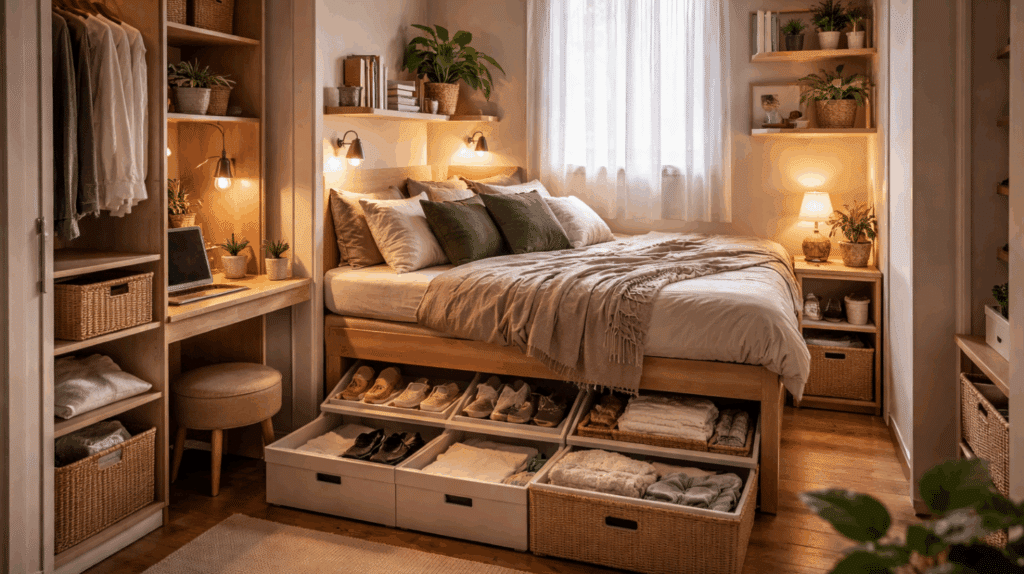
15 Innovative Storage Hacks For Tiny Bedrooms You’ll Want To Steal
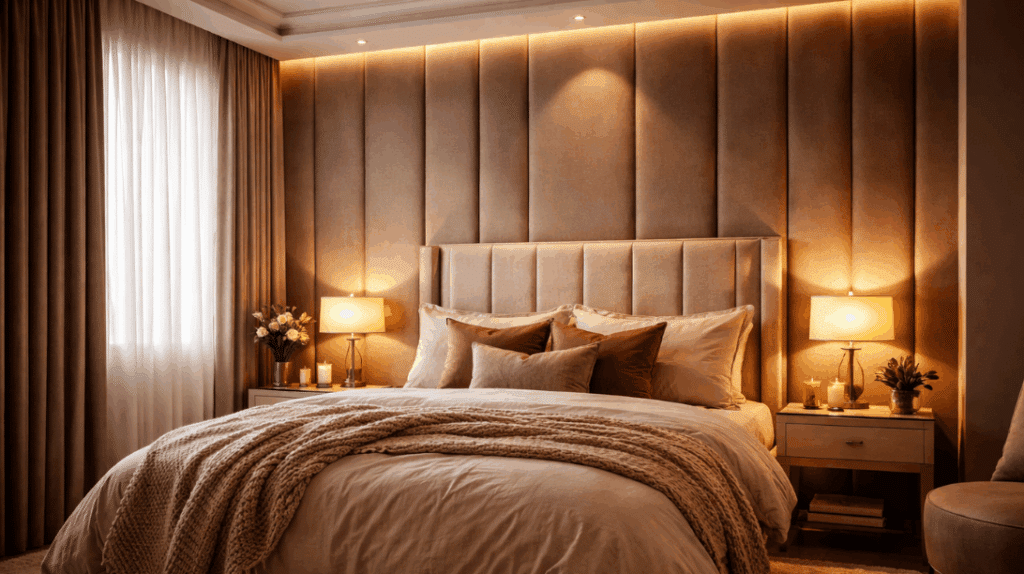
9 Upholstered Wall Panel Ideas For a Cozy Cocoon Bedroom You’ll Crave
How Small Bedroom Decor Fits Into Your Home
Small bedroom decor is the foundation of a flexible, adaptive home. These compact styling techniques pair beautifully with minimalist, cottagecore, and biophilic styles, proving that you don’t need a massive floor plan to achieve high-end comfort. By focusing on visual weight and multifunctional furniture, you create a restorative ecosystem that can evolve with your needs.