
Living Room Lighting Ideas
Living room lighting plays a key role in how your space looks and feels. The right lighting can make a living room feel cozy, bright, and inviting while highlighting furniture, wall decor, and layout.
In this guide, you will find practical living room lighting ideas designed for real homes. From ambient and task lighting to accent lighting and placement tips, these ideas help you create a comfortable and well lit living room.
The 3 Pillars of Living Room Lighting: What You Need to Know Before Buying
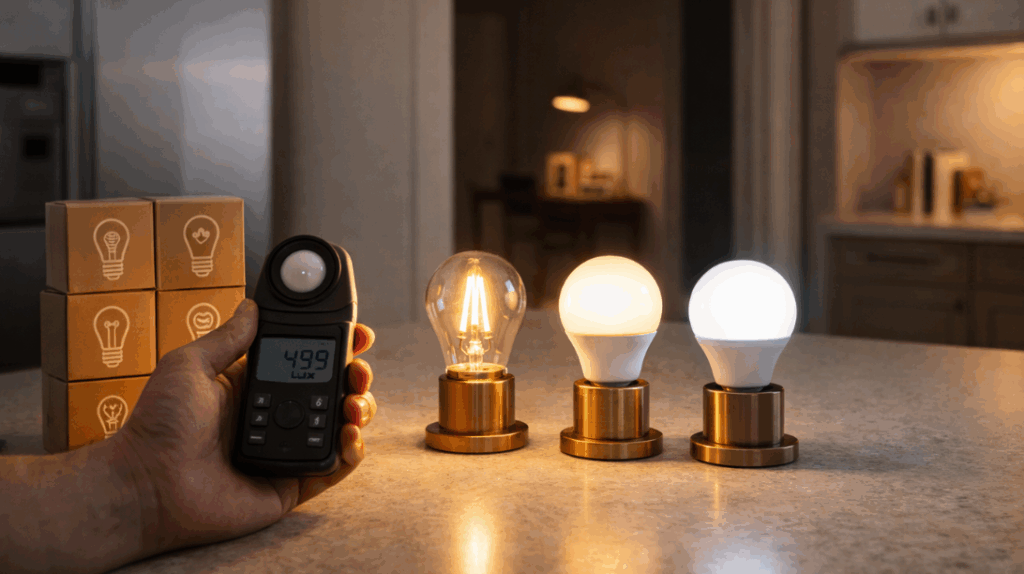
Before choosing a style, you must understand the quality of light. A beautiful lamp with the wrong bulb can make your living room feel like a hospital waiting room. For a deep dive into technical specifications like wattage equivalents and base types, read our complete guide on How to Choose the Right Light Bulb
1. Kelvin Temperature (K): The “Cozy” Factor
The “warmth” of a light is measured in Kelvin. For a living room, avoid anything over 3000K unless you are doing specific tasks like sewing.
- 2700K (Soft White): Best for evening relaxation. Mimics candlelight and sunset.
- 3000K (Warm White): A bit brighter and crisper. Good for reading lamps.
- 4000K+ (Cool White): Avoid in living rooms. This blue-tinted light suppresses melatonin and feels clinical.
2. The Lumen Rule: How Much Light Do You Need?
Don’t guess. Use this professional rule of thumb: A living room needs 10–20 Lumens per square foot for ambient lighting.
- Example: If your room is 12×15 feet (180 sq ft), you need roughly 1,800 to 3,600 lumens total.
- Tip: Never get this from a single source. Split it between ceiling lights, floor lamps, and table lamps to avoid harsh shadows.
3. CRI (Color Rendering Index): Seeing True Colors
Have you ever bought a blue rug that looked grey at night? That’s low CRI. Look for bulbs with a CRI of 90+. This ensures your paint colors, wood grains, and fabrics look rich and accurate, rather than muddy.
Why Living Room Lighting Matters
Lighting affects both the function and mood of a living room. Poor lighting can make a space feel flat or uncomfortable, while layered lighting creates depth and warmth.
Good living room lighting helps:
- Improve visibility for daily activities
- Create a welcoming and relaxed atmosphere
- Highlight decor and architectural features
- Make small or dark rooms feel brighter
A thoughtful lighting plan combines function with style.
Living Room Lighting Ideas That Work in Any Home
1. Start With Ambient Lighting
Ambient lighting provides overall illumination for the room. It sets the foundation for all other lighting layers.
Common ambient lighting options include:
- Ceiling-mounted fixtures
- Flush mount or semi flush lights
- Recessed lighting
- Large pendant lights
Choose warm bulbs to keep the living room feeling comfortable rather than harsh.
2. Add Task Lighting for Function
Task lighting focuses on specific activities like reading or working.
Useful task lighting ideas:
- Table lamps beside sofas or chairs
- Floor lamps near seating areas
- Adjustable wall mounted lights
Task lighting improves functionality without overwhelming the space.
3. Use Accent Lighting to Create Depth
Accent lighting creates Visual Hierarchy, guiding the eye to your room’s best features. Use techniques like Wall Grazing (placing sconces close to a textured wall) to emphasize stone or brick textures. Key fixtures include:
- Directional Spotlights to eliminate flat corners.
- High-CRI Picture Lights to make art colors pop.
- Architectural Sconces for vertical interest.
- Hidden LED Channels in joinery/shelving.
4. Choose the Right Light Bulbs
The bulb is the engine of your design. For a modern home, look for Tunable White smart bulbs. These allow you to shift from a crisp 4000K for daytime cleaning to a sunset-like 2200K for evening relaxation, supporting your body’s natural Circadian Rhythm.
Pro Tip: Ensure your LED fixtures are paired with compatible Dimmable Drivers. This prevents flickering and allows you to dial the brightness down to 10% for true Visual Comfort.
5. Use Floor Lamps to Define Seating Areas
Treat your floor lamps as art. This is the era of Lampscaping, curating lamps not just for light, but as sculptural objects. Pair a tall, Sculptural Arc Lamp for overhead zoning with shorter table lamps to create visual tension. Look for Biophilic Materials like rattan, linen, or alabaster shades. These organic textures act as natural diffusers, softening the light output to reduce glare while adding warmth to your layout.
6. Balance Natural and Artificial Light
Natural light should work alongside artificial lighting.
Ways to enhance natural light:
- Use sheer or light-filtering curtains
- Position mirrors to reflect daylight
- Keep window areas uncluttered
Balanced lighting creates a bright yet comfortable environment.
7. Layer Lighting for a Cozy Atmosphere
Layered lighting combines ambient, task, and accent lighting.
A layered approach:
- Prevents harsh shadows
- Adds warmth and depth
- Makes the space adaptable for different moods
This approach works well for both large and small living rooms.
Living Room Lighting Ideas for Small Spaces
In compact rooms, prioritize Vertical Illumination. By washing walls with light using sconces or floor cans, you visually push the boundaries of the room out, making it feel larger.
- Save Floor Space: Use swing-arm wall lamps instead of floor lamps to keep the floor footprint clear.
- Reflective Surfaces: Position lamps near mirrors to double the effective lumen output without adding extra fixtures.
Good lighting can make small spaces feel open and welcoming.
Living Room Lighting Styles to Explore
Lighting can support many living room styles, including:
- Modern living room lighting
- Cozy and warm lighting styles
- Minimalist lighting designs
- Industrial inspired lighting
- Neutral and timeless lighting
Choose lighting that complements your decor rather than overpowering it.
Pro Designer Rules: Spacing and Heights
Even the best fixtures will fail if placed incorrectly. Follow these standard interior design spacing rules:
- Sconce Height: Wall sconces should generally be mounted 60 to 72 inches from the floor, placing the bulb near eye level to reduce glare and cast a flattering glow on faces.
- The “7-Foot Rule” for Pendants: If hanging a pendant light in a walkway or center of the room, ensure the bottom of the fixture is at least 7 feet (84 inches) off the floor so tall guests don’t bump their heads.
- Recessed Light Spacing: Avoid the “swiss cheese” ceiling. Space your recessed cans approximately half the ceiling height apart. If you have 8-foot ceilings, space lights 4 feet apart.
Explore More Living Room Lighting Inspiration
Looking for more guidance? Explore our curated collection of related living room lighting articles below. These posts cover placement tips, fixture styles, and budget friendly lighting upgrades.
Browse our latest living room lighting blog posts for practical inspiration.
How to Choose the Right Light Bulb (Kelvin & Lumens Guide)
How Living Room Lighting Fits Into Your Decor
Lighting works best when it is planned alongside furniture, wall decor, and color choices. Well balanced lighting enhances the overall design of the living room.
For a complete styling approach, visit our Living Room Decor hub to explore connected ideas for cozy spaces, wall decor, and layout inspiration.