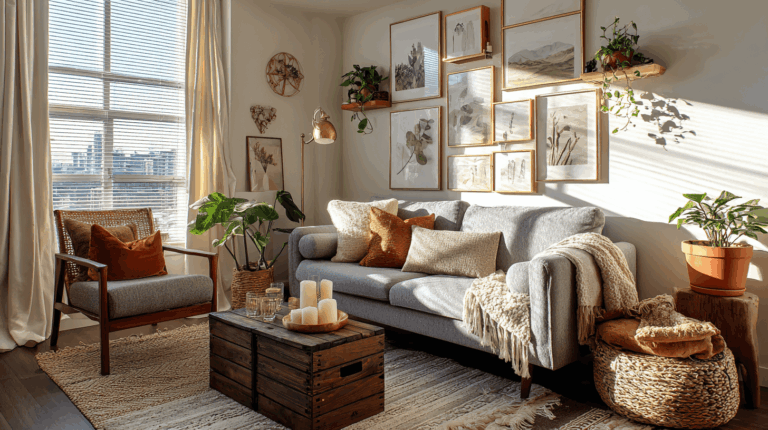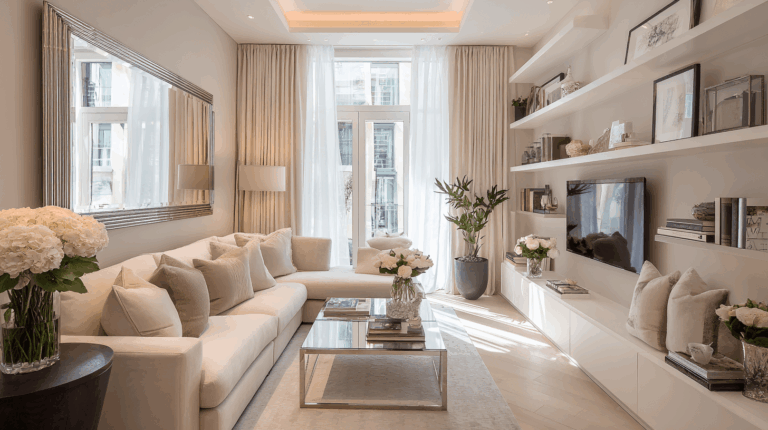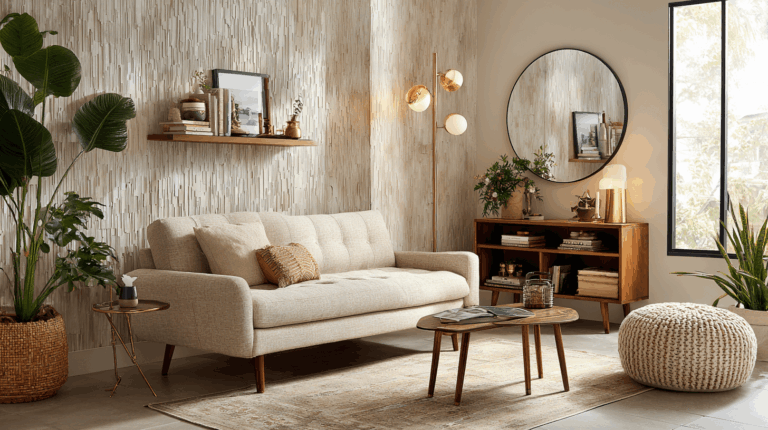
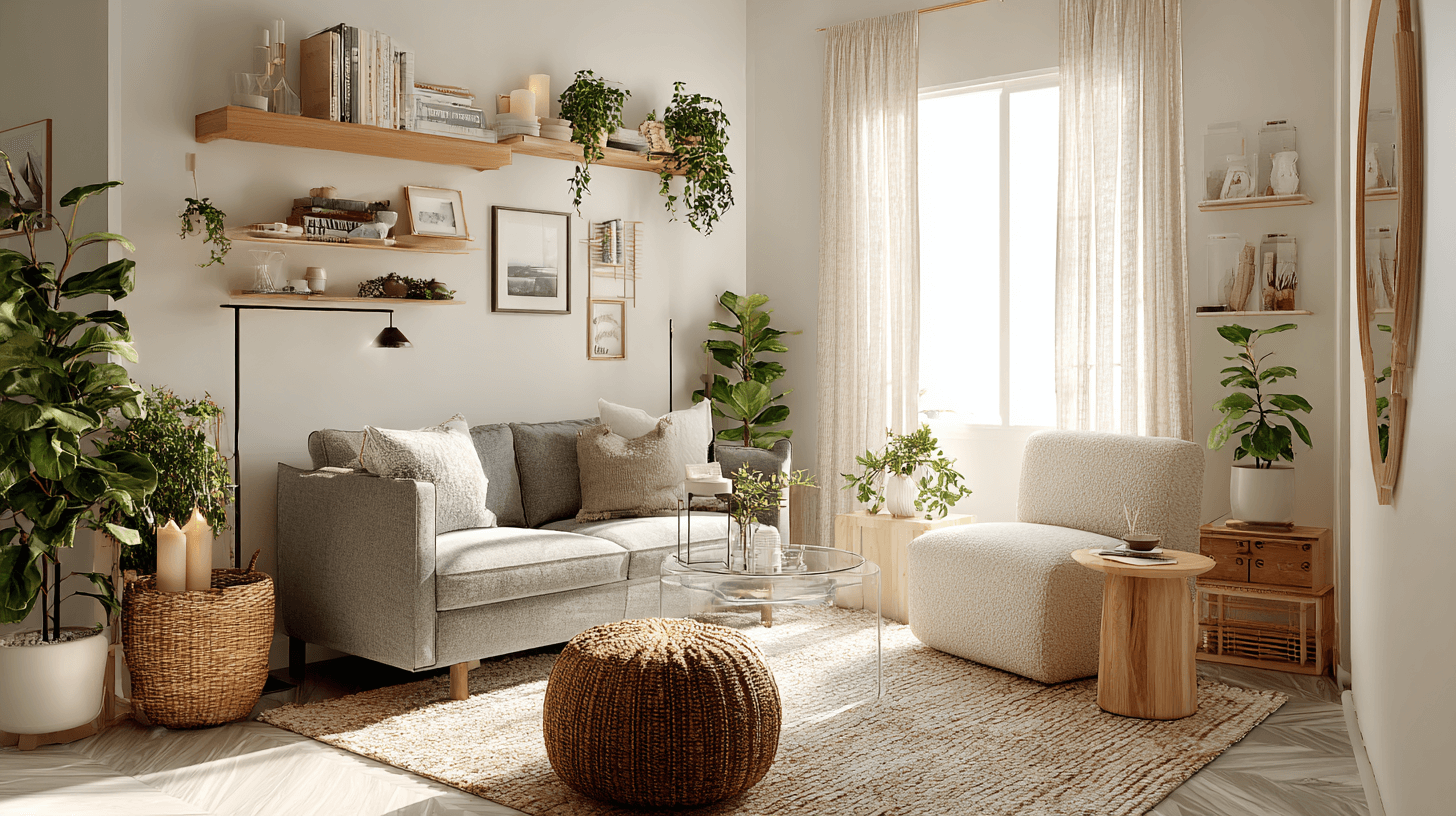
33 Small Living Room Decor Ideas for Apartments
Designing a small apartment living room starts with smart choices that earn their keep. You’ll lean on compact sofas, low-profile seating, and multiuse pieces to open up floor space. Mirrors can stretch light, while layered lighting and sheer curtains add warmth without clutter. A cohesive palette calms the eye, and slim coffee tables or mini desks keep things functional. Add peel-and-stick updates and airy shelves, then layer textures because the next tweak changes everything.
Start With a Small, Space-Saving Sofa
One smart move is choosing a compact, space-saving sofa that fits your room’s scale.
Measure wall length, doorways, and clearance so delivery and placement go smoothly.
Pick a streamlined silhouette with slim arms and raised legs to keep bulk down and sightlines open.
Choose two- or three-seaters over sectionals; prioritize firm cushions and durable, tight-weave fabric in mid-tone or neutral colors to minimize visual weight.
Look for storage-friendly designs like bench seats with hidden compartments.
Match seat height to existing chairs to maintain comfort.
Keep proportions balanced with a low-profile coffee table and a single, appropriately sized accent chair.
Float Furniture Off Walls in Small Rooms
Two simple shifts can make a tight room feel bigger: pull seating off the walls and create clear pathways.
Float furniture and carve clear paths to make tight rooms feel spacious.
When you float furniture, you define zones and let sightlines breathe. Slide a sofa a few inches forward, anchor it with a compact rug, and place a slender console or plant behind it.
Position chairs to face each other, not the walls, so conversation centers in the room. Keep traffic routes at least 24–30 inches wide.
Use a lightweight coffee table and a pair of small side tables to bridge gaps. Tuck storage ottomans along edges, not corners, to maintain flow.
Choose Low-Profile Seating for Small Spaces
As you pull seating off the walls to open sightlines, keep the furniture itself visually light.
Choose low-profile pieces with slim arms, shallow depths, and legs that lift seats off the floor. Exposed legs create airflow under furniture, making the room feel taller and broader.
Favor tight-back designs over bulky cushions to cut visual weight. Opt for armless or low-arm silhouettes that don’t interrupt views.
Prioritize lower backs to keep windows, art, and shelves visible. Select neutral or tonal upholstery that blends with walls, then add texture with a throw or pillow.
Scale coffee tables similarly low to maintain an easy, cohesive line.
Swap a Sofa for a Loveseat or Two Chairs
When square footage is tight, trade a bulky sofa for a loveseat or a pair of compact chairs to open up flexible seating and better flow.
You’ll reduce visual weight, gain pathways, and create conversation zones that actually fit. A streamlined loveseat anchors a wall without dominating it; two armless or slipper chairs angle easily around a rug, media unit, or window.
Choose pieces with exposed legs, tight backs, and slim arms to keep lines clean.
Float a loveseat slightly off the wall to breathe. Opt for swivel or lightweight chairs so you can reorient seating for guests, lounging, or movie nights.
Add a Slim, Multiuse Coffee Table
One hardworking coffee table can earn its keep in a small living room if it’s slim, mobile, and storage-smart.
Choose a narrow, rounded-rectangle profile to keep pathways clear. Look for a lightweight frame on discreet casters, so you can slide it aside during workouts or movie nights.
Prioritize hidden storage: a lift-top for laptop work, a shallow drawer for remotes, and a lower shelf for baskets.
Pick durable materials that visually lighten the room glass, acrylic, or light wood with slender legs.
Keep the surface tidy: a compact tray corrals coasters and a candle.
Scale matters; match table length to about two-thirds of your seating.
Pick Nesting or Stackable Side Tables
Your coffee table’s pulling weight; now let side tables flex, too. Choose nesting or stackable sets to add surfaces without surrendering space.
Slide the smaller table out for drinks, snacks, or laptops when guests drop by, then tuck it back to clear floor area.
Look for lightweight pieces you can move with one hand. Aim for tops around seat height so they’re easy to reach.
Mix shapes: a round nested pair softens corners; squared stacks align with sofas. Pick durable finishes, such as laminate, metal, or sealed wood, for coasters and crumbs.
Bonus: separate them as nightstands, plant stands, or sofa ends when layouts change.
Keep Sightlines Open With Leggy Pieces
Even in a tight room, you can make it feel airy by choosing furniture on slender, raised legs. When you lift a sofa, chair, or console, you reveal more floor and wall, so your eye reads the space as larger.
Opt for mid-century silhouettes, open metal bases, or wood frames with tapered legs.
Choose a glass or acrylic coffee table with a minimal base to keep views flowing. Mount lamps or use tripod floor lamps instead of bulky shades.
Float a slim bench instead of a blocky ottoman. Keep cords tidy and rugs light so the negative space stays continuous and calm.
Map a Small Living Room Layout First
Before buying anything, sketch the room to scale and plot fixed elements—doors, windows, outlets, and radiators.
Note traffic paths and the spots you must keep clear. Measure wall lengths, ceiling height, and the footprint of existing pieces you’ll keep.
Decide your focal point: TV wall, fireplace, or best window.
Then place the largest seating first, ensuring comfortable walkways, ideally 30–36 inches, minimum 24. Anchor it with an appropriately sized rug so front legs land on it.
Position a coffee table 14–18 inches from the sofa, and leave room to pull chairs out.
Test multiple arrangements on paper before you move anything.
Go Vertical With Tall, Slim Shelving
With your layout set, claim wall height with tall, slim shelving that keeps floors clear and sightlines open.
Choose narrow uprights that reach near the ceiling to draw eyes up and make the room feel taller. Anchor units securely and align them with doorframes or windows to create visual rhythm.
Mix open shelves with a few closed cubes to vary texture without bulk. Style vertically: stack books, add slender vases, and tuck a lamp on a middle shelf to layer light.
Keep negative space between groupings so the arrangement breathes. Repeat finishes with your coffee table or frames to tie everything together.
Choose Furniture With Hidden Storage
A small living room works harder when pieces pull double duty, so pick furniture that hides clutter in plain sight.
Choose a lift-top coffee table to stash remotes, coasters, and chargers. Opt for nesting side tables with concealed compartments for candles and books.
Pick a media console with drawers, not open cubbies, to reduce visual noise. Look for ottomans with trays on top and storage inside for blankets or games.
Select accent stools that open to hold cables or craft supplies. Favor slim silhouettes and matching finishes so pieces feel cohesive.
You’ll keep surfaces clear while making every inch earn its keep.
Tuck Storage Under Benches and Sofas
Smart storage doesn’t stop at lift-top tables put the space beneath benches and sofas to work, too.
Choose seating with tall legs or built-in drawers so you can slide low-profile bins, zippered soft totes, or rolling trays underneath. Measure the clearance and pick containers that glide smoothly and won’t snag rugs.
Store extra throw pillows, seasonal decor, board games, or workout gear out of sight yet within reach.
Add felt pads or wheels to protect floors. Label discreetly so you’ll find things fast. Keep the front edge tidy so it looks sleek.
You’ll expand capacity without adding visual bulk or clutter.
Use Baskets for Stylish Open Storage
Even in a tight footprint, baskets give you open storage that looks intentional, not cluttered.
Choose woven textures that match your palette: rattan for warmth, seagrass for airy lightness, or black wire for a modern edge.
Corral throws, magazines, remotes, and kids’ toys to keep surfaces clear. Use a trio under a console or beside the sofa to create rhythm and easy access.
Add lids for visual calm or open tops for grab-and-go. Mix sizes: a large floor basket for blankets, medium bins for books, small catchalls for chargers.
Label discreetly, rotate seasonally, and keep only what you actually use.
Use Wall-Mounted Lighting
Clear floors make room for light, so pair those tidy baskets with wall-mounted fixtures that free up precious surface space.
Mount sconces above sofas or beside chairs to replace bulky floor lamps and unclutter end tables. Choose plug-in models if you rent; they install fast and leave walls mostly untouched.
Position adjustable swing-arm lights where you read or chat, and aim shades to prevent glare on screens. Keep cords neat with adhesive clips.
Coordinate metal finishes with hardware for cohesion. For tight corners, use slim profiles. Dimmer-compatible fixtures let you fine-tune brightness.
Always confirm height: eye level when seated feels comfortable.
Layer Ambient, Task, and Accent Light
Think in layers to make a small living room feel bigger and more functional.
Start with ambient light: a slim ceiling fixture, track lighting, or an LED flush mount to evenly brighten the room.
Add task light where you read, work, or entertain—use a swing‑arm sconce beside the sofa, a compact floor lamp by a chair, or a clamp lamp on a shelf.
Finish with accent light to create depth: aim a picture light at art, tuck LED strips on a bookcase, or place a small uplight behind a plant.
Put each layer on separate dimmers so you can fine‑tune mood and flow.
Let in Light With Sheer Window Panels
While heavy drapes can box in a small space, sheer window panels soften the edges and flood the room with natural light. They filter glare, preserve privacy, and make your living room feel open and airy.
Choose lightweight fabrics like voile or linen blends in soft neutrals to keep the palette calm and cohesive. If you need more light control, layer sheers with discreet roller shades.
Choose airy voile or linen-blend sheers in soft neutrals; layer with discreet roller shades for flexible light control.
Select rod-pocket or grommet headers for a clean, tailored line. Keep panels slightly kissing the floor for a relaxed look and easy maintenance.
Finish with slim hardware and subtle patterns that won’t compete with your decor.
Hang Curtains High and Wide
Even in a compact living room, mounting your curtain rod several inches above the window frame and extending it wider than the casing makes the walls feel taller and the window appear grander.
Hang panels so they kiss the floor or break slightly for polish. Choose slim, sturdy rods and low-profile rings to keep lines clean.
Extend the rod 6–12 inches past each side so open panels stack off the glass, maximizing daylight and view.
Match curtain color to the wall for a seamless look, or use vertical stripes to emphasize height.
Keep patterns simple, hems even, and hardware aligned.
Embrace Mirrors to Double the Look of Space
After lifting the eye with well-placed curtains, amplify that airy feel with mirrors that bounce light and visually widen the room.
Position a large mirror opposite a window to catch daylight and reflect views. If windows are scarce, angle mirrors toward lamps or art to create depth.
Choose thin, minimal frames to keep sightlines clean. Flank a sofa with mirrored side tables or add a mirrored console to double brightness.
Try a floor mirror behind a plant to extend greenery. Hang mirrors at eye level, and keep them aligned with architectural lines so the reflection feels intentional, not chaotic.
Stick to a Light, Cohesive Palette
Because small rooms can feel busy fast, anchor yours with a light, cohesive palette that unifies every surface. Choose two or three soft hues and repeat them on walls, upholstery, rugs, and accents. Keep contrast gentle so lines blur and the room reads as one.
Paint trim to match walls, and pick window treatments in the same family to extend sightlines.
Select furniture in airy finishes: pale woods, light linens, and matte metals. Bring in texture—bouclé, woven grass, washed cotton—so things feel layered, not flat.
Edit accessories to a tight color story. When in doubt, remove the odd shade and simplify.
Use Tone-on-Tone Neutrals for Calm
Keep that cohesive palette going by layering tone-on-tone neutrals to quiet visual noise.
Choose warm whites, soft beige, and gentle greige on walls, upholstery, and rugs so the room feels open and composed. Vary shades and textures to add depth without clutter—think nubby linen, matte paint, and a wool flatweave.
Anchor seating with a slightly deeper neutral sofa, then echo its hue in curtains or a throw.
Add contrast subtly through wood tones, black metal, or stone. Limit patterns to small scales. Keep lines clean, surfaces tidy, and materials tactile.
Your space will look larger, feel calmer, and photograph beautifully.
Add Color With Small Decor Accents
Two or three well-placed accents can wake up a neutral room without crowding it.
Choose a tight palette—one bold hue, one supporting tone—so the space stays cohesive.
Swap in colorful throw pillows, a patterned lumbar, or a soft throw to layer quick impact.
Add a petite ceramic vase, a tinted glass bowl, or a lacquered tray on the coffee table for a crisp punch.
Warm it up with a single candleholder or a small lamp with a colored shade.
Repeat the hue in book spines or coasters.
Rotate pieces seasonally to refresh the look without adding visual bulk.
Use Large-Scale Art to Avoid Clutter
If small accents add spark, one statement piece anchors the room without visual noise.
Choose a large-scale artwork that spans significant wall space to simplify the composition of your living room. It draws the eye upward, creates hierarchy, and reduces the need for multiple small frames that read as clutter.
Match the palette to your sofa or throw pillows, or let a bold contrast energize neutrals. Hang it slightly above eye level to elongate the wall.
Keep surrounding surfaces clean: a slim frame, minimal accessories, and balanced negative space. You’ll get impact, coherence, and breathing room—without sacrificing personality.
Define Zones With a Small Rug
One well-chosen small rug can carve a clear zone in a compact living room without overwhelming it.
Choose a size that fits the activity: a 3×5 for a reading nook, a 4×6 to anchor a loveseat and side chair. Keep front furniture legs on the rug to visually unite the pieces. Pick low-pile for door clearance and easy cleaning.
Size rugs to the zone: 3×5 for reading, 4×6 for loveseat. Front legs on, low-pile for clearance.
Let pattern signal purpose. Subtle stripes can suggest direction; a tight geometric adds structure.
Use color to coordinate with throw pillows or a side chair, not to compete. Align the rug with walls to keep lines tidy, and leave consistent floor borders.
Create One Clear Focal Point
With zones defined underfoot, give your eye a single destination to rest. Choose one standout element and let everything else support it. Anchor the room with a striking piece: a bold artwork, a sculptural mirror, an architectural window, or a statement chair.
Center your seating toward it, align lighting to highlight it, and keep surrounding decor quiet.
Limit competing stars. Use a restrained palette, repeat one material, and vary scale subtly. Corral small accessories so they don’t steal attention.
Edit surfaces, hide visual noise, and leave breathing room around the focal point. When your gaze lands once, the whole space feels calmer and larger.
Set Up a Tidy, Compact Media Wall
Although screens can dominate a small room, you can keep them streamlined by building a compact media wall that hides clutter and earns its footprint.
Float a shallow cabinet or wall unit just wide enough for your devices. Include cord management, slim shelves for remotes, and a closed compartment for routers and game consoles.
Float a shallow cabinet with cord management, slim remote shelves, and a closed console compartment.
Choose low-profile hardware and a finish that matches your trim so the unit recedes. Anchor it on the longest wall to free floor space, and center seating accordingly.
Add a narrow ledge for speakers and a small plant. Keep decor tight: one tray, one picture, nothing extra.
Frame or Slim-Mount the TV to Blend In
After streamlining the media wall, make the screen itself feel intentional. Choose a slim-mount bracket so the TV hugs the wall like art.
Hide cables with an in-wall kit or a paintable raceway. If you can, add a simple frame—wood, metal, or a snap-on bezel—to echo your trim or furniture tones. Set the TV to ambient art or a muted screensaver when idle.
Keep scale in check: a smaller screen often balances better in tight rooms. Center it over the console, aligning edges with other wall pieces.
Avoid bulky soundbars; use compact speakers or a low-profile soundbase instead.
Carve Out a Tiny Entry Zone by the Door
Even a sliver by the door can work hard if you define it. Anchor the spot with a skinny runner to signal arrival. Mount a small shelf or narrow console to catch keys and mail. Add a slim wall hook rail for coats, bags, and umbrellas. Tuck a low tray or boot mat under the shelf for shoes.
Use vertical space: a petite mirror bounces light and lets you check your look. Choose shallow pieces so the door swings freely. Corral clutter with lidded baskets.
Keep colors cohesive with the living room, and repeat one material, like black metal or oak, for continuity.
Keep Foldable Pieces for Guests and Dining
When floor space is tight, stash a few foldable workhorses so you can scale up on demand.
Keep a compact folding dining table that tucks against a wall, then opens for takeout nights or friends.
Store slim folding chairs behind a sofa or under a bed; choose lightweight ones with padded seats for comfort.
A nesting tray table doubles as a side table and extra surface.
Opt for a collapsible bench or ottomans that unfold for seating, then stack flat.
Use a low-profile bar cart that folds, too.
Label storage spots so setup’s quick, and keep pieces in the same finish for cohesion.
Turn Corners Into Useful Seating or Storage
Two neglected corners can become hardworking zones with a few smart moves.
Turn neglected corners into hardworking zones with a few smart, space-saving moves.
Tuck in an L-shaped bench with hidden storage to stash throws, board games, or remotes. Add a slim bistro table or laptop perch beside it for quick tasks.
Mount floating corner shelves for books, speakers, or a compact lamp. Choose nesting stools that slide underneath when not in use.
Install a corner media bracket to free floor space and streamline cables. Try a corner bar cart or tray tower for serveware.
Keep pathways clear by matching depths to traffic flow. Repeat finishes for cohesion, and anchor each corner with a small rug.
Add Small-Space Friendly Plants
Although your square footage is tight, you can still layer in life with compact, low-maintenance plants that double as decor.
Choose upright varieties like snake plant, zz plant, or parlor palm to add height without bulk. Tuck trailing pothos on shelves, window ledges, or a narrow wall-mounted rail. Use one or two statement planters instead of many tiny pots to reduce visual clutter.
Think vertical: a slim ladder shelf or hanging ceiling hook lifts greenery off the floor.
Group plants by light needs near your brightest window. Water on a schedule and rotate weekly for even growth. Add a small saucer to protect surfaces.
Integrate a Mini Desk Without Crowding
Those same vertical tricks that lift greenery can also make room for a compact workspace.
Mount a slim wall desk or a fold-down secretary to keep floor space open. Choose a narrow task chair that tucks fully under the surface. Keep cords tidy with adhesive clips and a low-profile power strip. Place the setup near an outlet and window for natural light.
Use a laptop stand to create knee clearance and stash essentials in a shallow drawer. Pick a finish that matches your sofa legs to visually recede.
When work’s done, close the desk, slide in the chair, and reclaim the room.
Style Shelves With Airy Spacing
Because small rooms can feel crowded fast, style your shelves with generous negative space to let the eye rest.
Group items in odd numbers, then leave clear gaps so each vignette breathes. Mix heights: a tall vase, a medium stack of books, a small bowl. Align some pieces to the edge; center others to create rhythm.
Group in odd numbers, mix heights, and leave breathing room for visual rhythm.
Keep a cohesive palette and one accent color for pop. Use trays to corral small objects. Rotate displays seasonally instead of adding more.
Dust the open areas so they read intentional, not empty. When in doubt, remove one item—and gain visual calm.
Refresh With Peel-and-Stick Updates
When you want a fast facelift without a full reno, turn to peel-and-stick finishes for walls, floors, furniture, and even appliances.
Try removable wallpaper to add pattern on a feature wall, or use decals to frame a TV or doorway. Cover dated ceramic tile with vinyl stickers, or lay down peel-and-stick planks to fake a wood-look floor.
Wrap a scratched coffee table with faux wood film, refresh cabinet fronts with matte color, and disguise a fridge with stainless-style sheets.
Measure carefully, clean surfaces, and smooth bubbles as you apply. When you’re ready to move, peel it off without damage.
Personalize With Layered Textiles and Texture
Even in a compact space, layered textiles instantly add warmth, color, and personality without crowding the room.
Start with a neutral foundation—sofa, rug, walls—then layer texture for depth. Mix a nubby throw with linen pillows, velvet cushions, and a woven lumbar for contrast.
Start with neutrals, then layer textures: nubby throw, linen pillows, velvet cushions, woven lumbar for contrast.
Add a small kilim or sheepskin over a flatweave rug to define seating.
Use varied scales: thin stripes, subtle herringbone, and a bold motif. Keep a cohesive palette so everything feels intentional.
Incorporate natural fibers—jute, wool, cotton—for breathability. Swap pillow covers seasonally.
Finish with a textured lampshade, a knit pouf, and a soft curtain to diffuse light.
Conclusion
You’ve got everything you need to turn your small living room into a stylish, hardworking space. Start with compact seating, float pieces off the walls, and lean into low-profile silhouettes. Swap in multiuse furniture, add a slim coffee table, and tuck in a mini desk without crowding. Keep shelves airy, refresh with peel-and-stick updates, and personalize with layered textiles. Use mirrors, layered lighting, and sheer curtains. Stick to a cohesive palette, and let smart accents tie it all together.