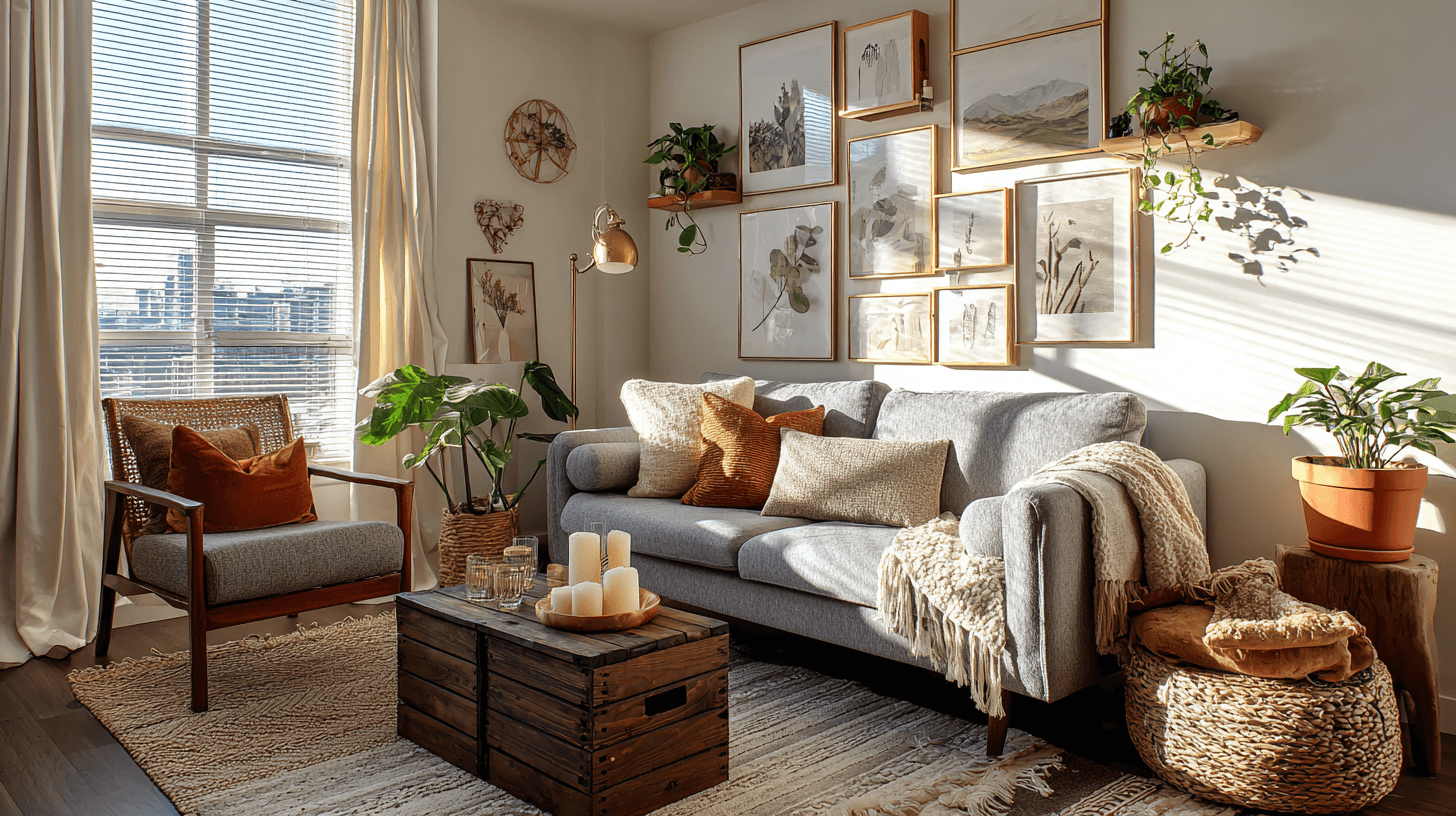
19 Small Living Room Decor Ideas on a Budget
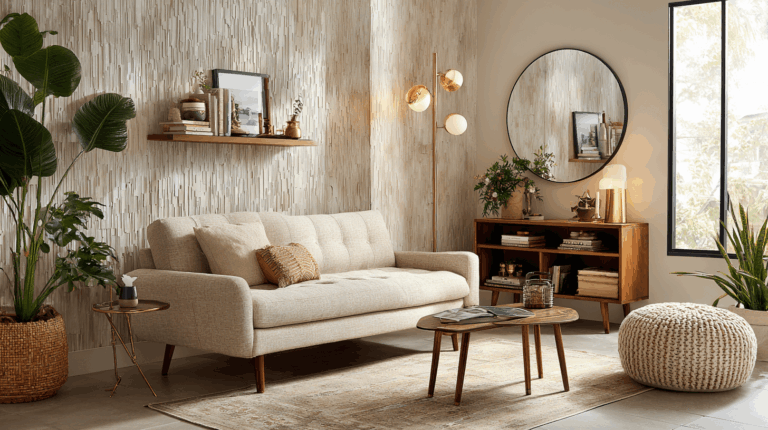
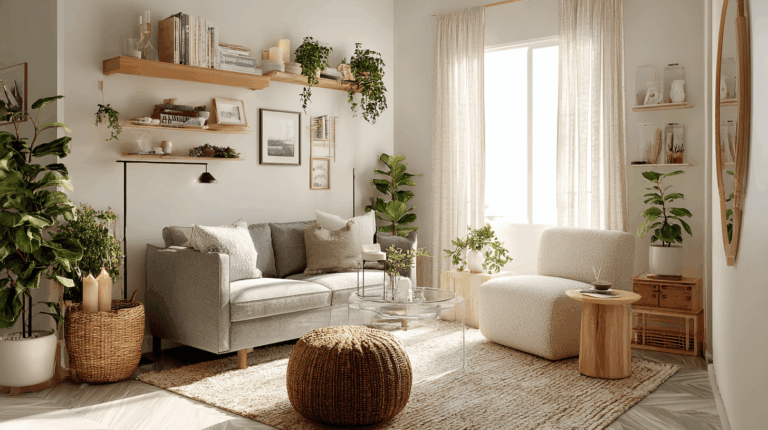
You can make a small living room feel bigger and more stylish without spending much by rethinking layout, choosing compact furniture, and using a few smart swaps. Start with a simple plan, then float pieces to improve flow. A large rug, mirrors, and vertical storage do heavy lifting. Add thrifted textiles, nesting tables, and low-maintenance plants for polish. With a couple DIY touches and seasonal refreshes, you’ll see how each change stacks up to…
Plan Your Small Living Room Layout First
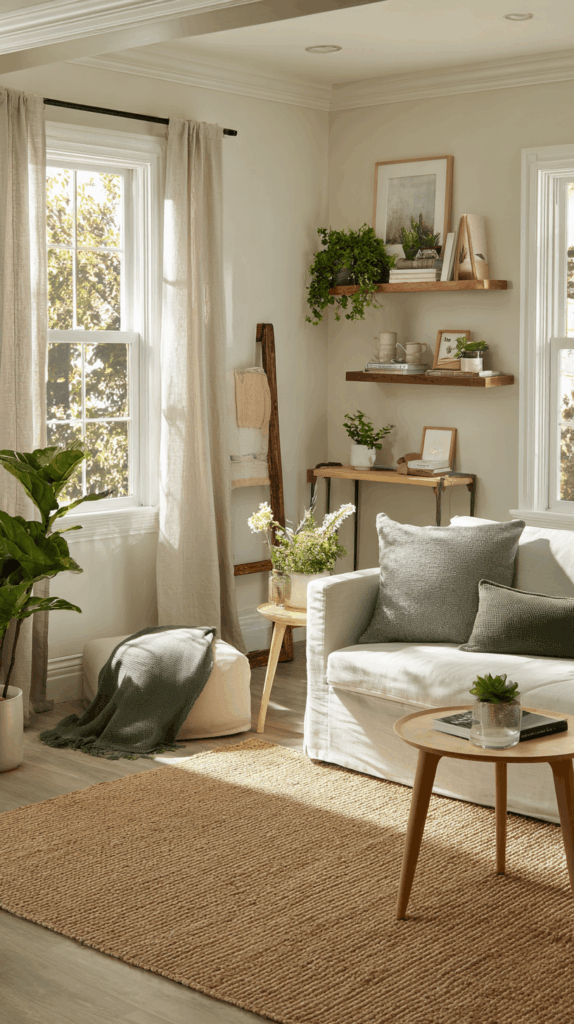
Before you buy a single pillow, map out how the room will function and flow.
List what you do there: unwind, host, work, or watch TV. Prioritize the must-haves, then measure the room, doors, and windows.
List your activities, prioritize must-haves, then measure the room, doors, and windows for fit.
Sketch a quick floor plan on paper or use free apps. Mark outlets, radiators, and sightlines. Choose a focal point, like a window or media wall, and arrange zones around it.
Scale matters. Opt for compact seating and low-profile storage that fits your dimensions.
Leave comfortable clearances between pieces. Plan lighting layers with lamps you already own.
Finally, note what’s missing and set a simple, realistic budget.
Float Furniture for Better Traffic Flow
Even in a tight room, pulling pieces off the walls can instantly open pathways and make the space feel larger.
Float your sofa a few inches forward and pair it with a slim console behind it. Angle chairs to create conversation zones and keep clear walking lanes to doors and windows.
Use compact, leggy pieces so light passes underneath, reducing visual bulk. Tuck a narrow bench or ottoman where a bulky table would crowd movement.
Try nesting tables you can shift as needed. Measure circulation routes—aim for at least 30 inches. Use felt pads to slide pieces until traffic feels natural.
Roll Out a Large Rug to Unify the Space
While small rooms can feel choppy with scattered accents, a generously sized rug pulls everything together and makes the layout read as one cohesive zone.
Choose a rug that fits under all front legs of your pieces to define the core area and steady visual flow. Go bigger than you think; a too-small rug shrinks the room.
Let the rug anchor every front leg—bigger reads calmer. Small rugs chop rooms and shrink the space.
Stick to low-pile options for easy cleaning and door clearance. Use stripes or a subtle grid to lengthen or widen the space.
Shop outlet seconds, online flash sales, and natural-fiber options for budget wins. Add a non-slip pad to smooth bumps and boost comfort.
Pick Compact Small Living Room Seating
With the rug anchoring your layout, focus on seating that earns its footprint. Choose a slim sofa or loveseat with raised legs to show more floor and lighten the room. Opt for tight-back cushions; they look tailored and save inches.
Armless chairs or a streamlined accent chair slide in easily and rotate for flexible conversation. Seek multi-use pieces: a sleeper loveseat for guests, or a storage bench for throws. Prioritize durable, budget fabrics like polyester blends or performance upholstery.
Keep scale consistent—low profiles pair better with low tables and shorter windows. Leave breathing space so pathways stay clear and the room feels open.
Swap Bulky Coffee Tables for Nesting Sets
Instead of a single heavy table that eats floor space, bring in a set of nesting tables you can pull apart or tuck away as needed.
You’ll gain surfaces when guests arrive and reclaim room for daily flow. Look for lightweight metal frames or slim wood tops that slide easily.
Choose round or oval shapes to soften tight pathways and prevent bruised shins. Mix finishes that echo your rug or media unit for cohesion.
Add a tray to the top table for remotes and mugs. When you’re done, stack them neatly; you’ve kept function, cut clutter, and stretched your small room’s footprint.
Create Zones With Slim Consoles and Side Tables
Borders matter in a small living room, and slim consoles or side tables help you draw them without bulk.
Use a narrow console to define an entry path behind a sofa, guiding flow without blocking light. Flank a loveseat with petite tables to mark a conversation zone, giving guests a spot for drinks and lamps.
Define pathways with a slim console; flank loveseats with petite tables for effortless, light-filled conversation zones.
Place a skinny console under a window to anchor a reading corner; pair it with a compact chair and task light. Float a slender table between two chairs to separate seating from media.
Choose open bases, glass, or metal frames to keep sightlines clear and the room feeling airy.
Try Multipurpose Pieces With Hidden Storage
Because every inch counts in a small living room, choose furniture that works double-duty and hides clutter.
Opt for a lift-top coffee table to stash remotes, chargers, and coasters; it also becomes a laptop perch for quick tasks.
Pick an ottoman with a hinged lid to store throws or games and pull in extra seating.
Choose a sofa with built-in drawers or a chaise with a storage compartment for pillows.
Use a media console with doors to corral accessories and routers.
Favor nesting tables with hidden shelves.
Stick to clean lines and neutral fabrics so the room feels open, calm, and tidy.
Use Vertical Storage to Free Up Floor Space
Once multipurpose pieces handle the clutter on the ground, look up and put your walls to work.
Mount narrow shelves above the sofa for books and art. Install floating ledges near corners to display plants without eating floor space. Use tall, slim bookcases that reach the ceiling to draw eyes upward and expand the room visually.
Add over-door racks for lightweight items. Consider pegboards for flexible layouts that adapt as needs change. Choose brackets and finishes that match your style, then anchor everything into studs for safety.
Keep pathways clear by lifting lighting with wall sconces instead of floor lamps.
Declutter With Baskets, Trays, and Wall Rails
Even in a tight space, simple catchalls tame visual noise fast.
Corral remotes, coasters, and chargers on a tray so surfaces look intentional, not scattered. Slip a lidded basket under the coffee table for throws or magazines. Use a narrow bin by the sofa for mail and laptops.
Corral remotes, coasters, and chargers on a tray for tidy, intentional surfaces.
Mount wall rails with hooks or cups to hold headphones, keys, and TV cords—no drilling? Use adhesive rails.
Choose stackable baskets for shelves and label them. Opt for woven or wire styles to spot contents quickly. Keep a donation basket to cycle out extras.
Reset trays nightly—you’ll maintain order without spending much.
Choose a Light, Cohesive Small Living Room Palette
With clutter corralled, let your room breathe with a light, cohesive palette that makes every inch feel larger.
Choose two or three soft neutrals—warm white, oatmeal, greige—and one gentle accent like dusty blue or sage.
Paint walls and trim in the same light tone to blur edges. Keep large pieces—sofa, rug, curtains—within this range for visual calm.
Layer textures instead of colors: linen, boucle, natural wood. Repeat finishes across the room for continuity.
Refresh thrifted finds with matching paint. Swap busy patterns for subtle stripes or micro-prints.
Use cohesive pillow covers and throws to tie everything together affordably.
Add Mirrors to Make Small Rooms Feel Bigger
While your palette sets a calm foundation, mirrors instantly amplify light and sightlines to make a small living room feel spacious.
Position a mirror across from a window or lamp to bounce brightness deeper into the room. Choose a large, thin-framed mirror to maximize reflection without visual weight.
Place a large, thin-framed mirror opposite a window to bounce light and expand your space.
Layer small mirrors in a grid for a polished, budget-friendly statement. Angle mirrors slightly to catch flattering views and avoid cluttered reflections.
Use adhesive mirror tiles for a low-cost, renter-friendly upgrade. Keep frames cohesive with your finishes. Clean glass often so light stays crisp.
One impactful mirror beats several tiny ones.
Hang Curtains High and Wide
Because your eye follows lines upward, hanging curtains close to the ceiling and extending the rod beyond the window frame instantly boosts height and width.
Mount brackets a few inches below the ceiling or crown to elongate walls. Extend the rod 6–12 inches past each side so panels clear glass and maximize daylight.
Choose lightweight, solid fabrics to keep sightlines clean; hem panels to kiss the floor for a tailored look.
Use affordable curtain rings for easy glide and consistent pleats. If you rent, try tension rods or removable anchors.
Keep hardware simple and slim, matching finishes to existing metal accents for cohesion.
Layer Lighting With Floor and Table Lamps
Even in a tiny living room, layered lighting creates depth, warmth, and flexibility without a big spend.
Pair a slim floor lamp with a compact table lamp to balance height and glow. Use warm LED bulbs (2700–3000K) and dimmable plugs to fine-tune mood. Place a floor lamp behind seating to bounce light off walls, then anchor a table lamp near conversation zones for task light.
Vary shades: linen softens, metal focuses. Mix up-down and diffused light to avoid harsh shadows. Hide cords with clips. Thrift sturdy bases, then refresh with new shades.
Keep scale small, switches reachable, and angles glare-free.
Style a Budget Gallery Wall With Thrifted Art
One great way to fill blank walls on a budget is a curated gallery of thrifted art that feels collected, not cluttered.
Hunt frames and prints at thrift stores, flea markets, and online swaps. Mix mediums—vintage landscapes, sketches, postcards, even album covers. Choose a loose color palette to tie pieces together. Swap any damaged mats; paint mismatched frames one cohesive tone or keep a balanced mix.
Hunt thrifted frames and prints; mix mediums. Keep a loose palette. Refresh mats, paint frames cohesive or artfully mixed.
Lay everything on the floor first. Start with a visual anchor, then build outward, keeping even spacing. Use paper templates and painter’s tape to plan. Hang with small nails or removable hooks.
Edit ruthlessly so the arrangement breathes.
Refresh Walls With Removable Wallpaper or Decals
If your gallery wall still leaves you craving pattern, turn to removable wallpaper or decals for instant impact without commitment. Peel-and-stick options install fast, lift cleanly, and won’t wreck rental walls.
Use one accent wall to expand a small room visually, or frame a simple panel behind the sofa for a budget focal point. Choose vertical stripes to heighten ceilings, tiny geometrics to read as texture, or a soft mural to deepen the view.
Order samples, test colors in daylight and lamp light, then measure twice to avoid waste. Smooth bubbles with a squeegee, trim edges, and you’re done.
DIY Pillow Covers and Slipcovers for Quick Updates
Swap out pillow covers and add simple slipcovers to refresh your living room fast without splurging. Choose durable, washable fabrics—cotton, canvas, or linen blends. Measure cushions carefully; add seam allowances and a zipper or envelope back for easy removal.
For slipcovers, drape fabric over your sofa, pin along edges, then stitch or use fusible tape. Stick to a tight palette so small rooms feel cohesive. Mix textures—ribbed knits, faux leather, or boucle—for depth without clutter.
Reuse thrifted textiles or curtains to cut costs. Rotate covers seasonally. Keep patterns small-scale, stripes vertical, and solids dominant to visually streamline your seating.
Bring In Low-Maintenance Plants for Tight Corners
Even in a small living room, you can tuck low-maintenance plants into tight corners to add life without adding chores.
Pick species that forgive missed waterings: snake plant, ZZ plant, pothos, or cast-iron plant. Use slim, tall planters to lift foliage above baseboards and keep floors clear.
Place a plant stand beside the sofa or under a window’s edge to catch indirect light. Water deeply but infrequently, and rotate pots monthly for even growth.
Group two or three small plants to create height variation. Choose lightweight pots with saucers, add felt pads to protect floors, and keep foliage pruned to fit.
Thrift, Hunt Marketplace, and Upcycle Finds
Plants add life, but your budget stretches further when you score character-rich pieces secondhand and make them your own.
Browse thrift stores early, set alerts on Facebook Marketplace, and search by material—“solid wood,” “rattan,” “wool”—to avoid flimsy buys.
Measure your space and bring a tape; scale matters most in a small room.
Prioritize multiuse items: nesting tables, slim consoles, stools doubling as side tables.
Refresh with paint, new hardware, or fabric.
Cover scratches with toner pens, oil thirsty wood, and swap dated shades on lamps.
Clean upholstery thoroughly, or re-cover cushions.
Negotiate politely, pick up fast, and trust patina.
Do Seasonal Small Living Room Decor Swaps
While the bones of your room stay the same, rotate a few low-cost accents to reflect the season without cluttering a small space.
Swap pillow covers, throw blankets, and a single art print. Use a neutral base so small changes pop.
In spring, add pastel pillows, a striped throw, and fresh greenery.
Summer loves airy cotton, a woven tray, and citrus hues.
For fall, layer a rust throw, plaid cover, and dried stems.
Winter welcomes chunky knits, deep tones, and twinkle lights.
Store off-season pieces in labeled bins under the sofa.
Set a reminder to switch quarterly and keep it fun.
Conclusion
You’ve got everything you need to turn a small living room into a stylish, flexible space without overspending. Start with a smart layout, float furniture for flow, and anchor it all with a big, low-pile rug. Choose compact seating, swap in nesting tables, and refresh with DIY pillow covers. Add easy plants, thrift unique pieces, and upcycle what you have. Keep clutter off floors with vertical storage and rotate seasonal decor to keep things fresh and inviting.