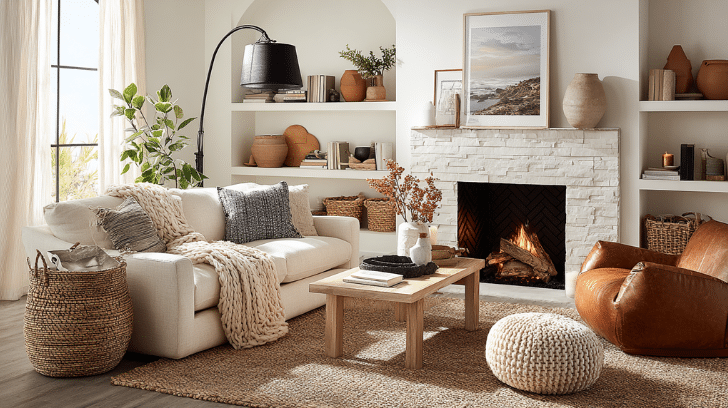
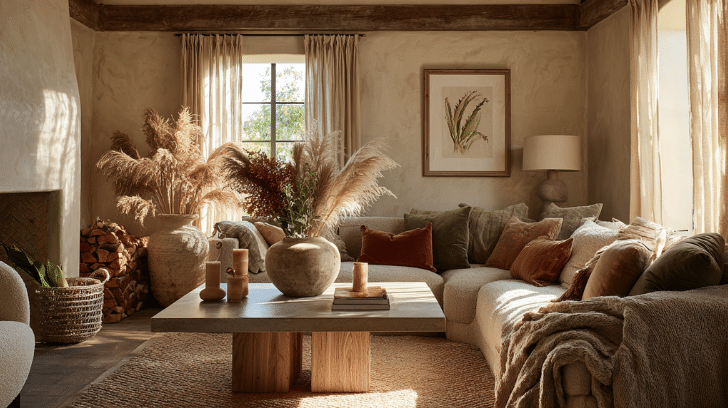
27 Cozy Living Room Decor Ideas With Textures
You want a living room that feels warm without visual clutter, and textures are your shortcut. Start by setting a simple palette, then layer rugs, knits, and nubby linens for depth. Mix materials—wool, wood, stone, and woven fibers—to balance softness and structure. Add plants and tactile trays to anchor small vignettes. Rotate seasonal textures to keep things fresh on a budget. Ready to map zones, layer counts, and a smart material mix that actually works?
Set a Texture Palette and Material Mix
Even before you pick colors, decide on a texture palette to anchor the room’s mood.
Choose three to five materials that play well together and repeat them intentionally. Pair a chunky knit with smooth leather, nubby linen with matte ceramic, or velvet with raw wood.
Choose three to five materials and repeat them. Pair chunky knits with leather, linen with ceramic, velvet with raw wood.
Balance warm and cool surfaces so the room feels grounded, not busy. Use one dominant texture, one secondary, and a couple of accents.
Contrast sheen and grain: glossy glaze against open-pore oak, soft boucle beside cool metal. Let hand-feel guide you—touch everything.
Keep patterns subtle so textures lead. Edit ruthlessly; if it clashes, remove it.
Define Zones and Layer Counts per Zone
Start by mapping three core zones—conversation, reading, and media—and give each a clear “layer count.”
In the conversation zone, plan 5–6 layers: overhead light, table/floor lamps, seating, side tables, a soft rug, and a throw/pillow mix.
For the reading zone, use 4–5 layers: a focused lamp, a supportive chair, a side table, a tactile throw, and a small ottoman.
For the media zone, set 4–6 layers: adjustable lighting, a media console, low seating or a sectional, a textured blanket, and sound‑softening elements.
Keep walkways open. Anchor each zone visually. Balance materials across zones so textures repeat purposefully.
Choose a Cozy Textured Area Rug (And Pad)
While sofas and lamps set the scene, the area rug quietly does the heavy lifting—warming the room, defining zones, and softening sound.
Choose a plush, textured weave that feels good underfoot and visually anchors your layout. Think wool, wool-blend, or dense synthetic with a soft hand; boucle, shag, or low-pile ribbing add cozy dimension without fuss. Size it so front furniture legs sit on the rug for stability.
Don’t skip the pad. Select a felt or felt–rubber pad to boost cushioning, prevent slipping, and preserve fibers.
A quality pad improves acoustics, protects floors, and makes every step quieter, warmer, and more inviting.
Layer a Secondary Rug for Depth
With a cushy base underfoot, you can amplify warmth by layering a smaller rug on top for depth and contrast.
Choose a flatweave or patterned accent that’s 60–70% of the base rug’s width so edges frame it cleanly. Offset the top rug slightly to guide the eye toward your seating.
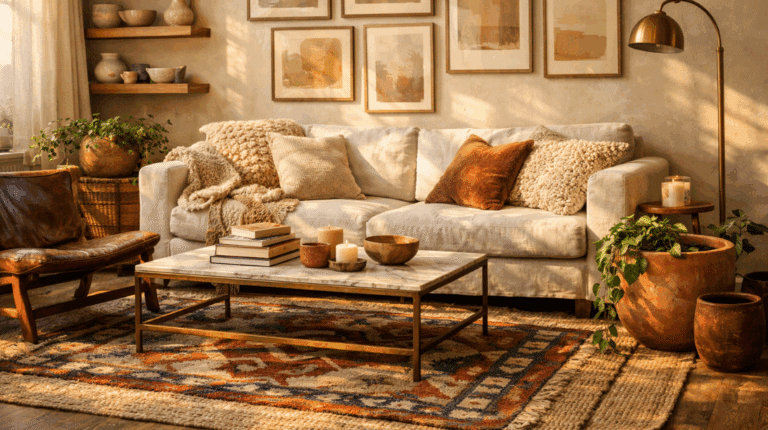
Mix textures: pair a plush shag with kilim, jute with wool, or low-pile with braided.
Keep palettes complementary; echo one hue from your throw pillows or art. Add a non-slip pad to stop shifting.
Rotate layers seasonally to refresh the look. Finally, vacuum both regularly to prevent grit from wearing fibers.
Bring in a Linen or Nubby Slipcover
Even before you swap furniture, a linen or nubby slipcover can instantly soften your living room and make seating feel inviting.
Choose a tailored fit for clean lines or a relaxed drape for casual charm. Stick to warm neutrals—ecru, oatmeal, dove—to layer subtle depth without visual noise.
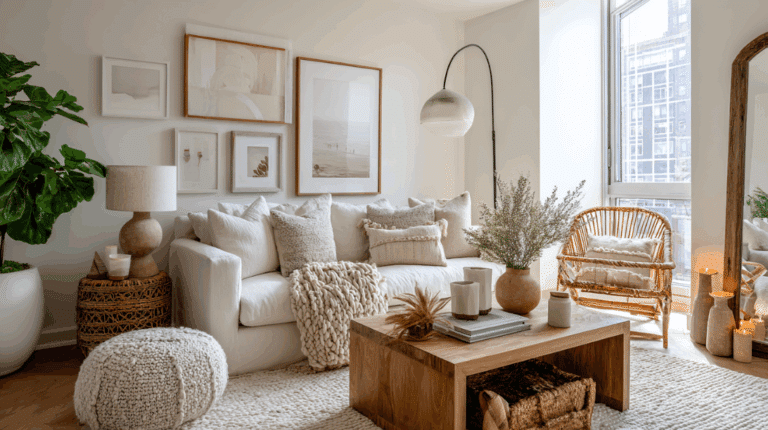
Choose tailored lines or a relaxed drape; warm neutrals layer depth without visual noise.
Texture matters: linen breathes and wrinkles beautifully; nubby weaves add tactile interest and disguise wear.
Measure carefully, prioritize machine-washable fabrics, and look for ties or elastic to keep everything in place.
Cover matching ottomans or benches to unify the room. Rotate seasonal hues to refresh the space without committing to new upholstery.
Mix Chunky Knit and Bouclé Throws
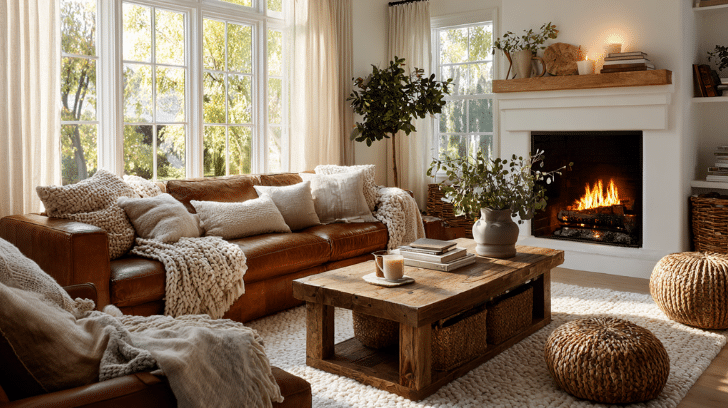
Slipcovered seating sets a soft foundation, and layered throws take the coziness further. Drape a chunky knit across the back of your sofa for instant warmth, then fold a bouclé throw at the arm or end to introduce subtle texture contrast.
Keep the palette cohesive—creams, foggy grays, or warm taupes—so the interplay reads intentional, not busy. Vary scale: a wide, oversized knit pairs well with a tighter bouclé loop.
Rotate placements seasonally; spread both for winter depth, pare back for spring. Anchor the scene with a woven basket nearby, so you can grab, layer, and lounge without visual clutter.
Add Textured Pillows in Tonal Layers
Though the palette stays calm, let your pillows do the talking through texture. Layer cushions in similar hues—cream, taupe, sand, or charcoal—so the surface variation stands out without visual noise.
Start with larger linen or cotton covers as a base. Add mid-size pillows in slubbed velvet, ribbed knit, or nubby bouclé. Finish with a small accent in embroidery, fringe, or soft chenille.
Vary scale and placement: solids behind, subtle patterns in the middle, tactile stars up front. Keep inserts plush for a sink-in feel. Rotate diagonals and horizontals to avoid stiffness.
Edit to three textures per seat to maintain harmony.
Balance Matte Finds With a Little Sheen
With texture doing the talking, give the eye a gentle glimmer to keep things lively. Pair your nubby sofa, chunky knits, and matte woods with subtle shine so the room feels layered, not dull. Think brass tray on a raw oak coffee table, a satin pillow among bouclé cushions, or a glass lamp beside a ceramic vase.
Keep sheen restrained. Choose one or two reflective notes per zone: a polished picture frame, a lacquered box, or a low-luster silk throw.
Mix finishes—brushed, antiqued, smoked—so nothing reads flashy. You’ll add light play, highlight your textures, and create balance without losing cozy calm.
Warm Up Walls With Limewash or Plaster
Even before you swap a sofa, you can transform the mood by treating your walls with limewash or plaster.
Limewash gives a soft, cloudy movement that absorbs light, taming glare and adding depth. It breathes, so it’s great on plaster or masonry, and it patinates beautifully over time.
Soft, clouded limewash absorbs light, calms glare, and deepens space—breathable, beautiful, and patinated with time.
For a richer hand, try Venetian or textured plaster. You’ll get subtle dimension, warmth, and a refined, tactile finish that feels custom.
Choose earthy neutrals—mushroom, oatmeal, clay—to anchor furnishings and soften shadows. Test swatches in different light, apply with a brush or trowel, and layer thin coats.
Seal selectively to retain that velvety, matte glow.
Add Wall Texture With Grasscloth or Paneling
Because texture instantly warms a room, consider wrapping your walls in grasscloth or adding paneling to create depth without clutter.
Grasscloth introduces subtle weave, gentle sheen, and soft shadows that make neutrals feel layered. Choose tight weaves for a refined vibe or looser fibers for relaxed character.
If you prefer paintable texture, install paneling—shiplap, beadboard, or square-grid moulding—to add rhythm and dimension. Keep profiles slim, align seams cleanly, and cap edges with simple trim.
Balance the wall texture with smooth upholstery and matte metals. Use a single feature wall or envelop the room for a cocooning effect, depending on scale.
Use Raw Wood and Live-Edge Accents
Although polished finishes have their place, raw wood and live-edge accents bring the warmth and irregular beauty that make a living room feel grounded.
Choose a coffee table or console with a natural edge to showcase grain, knots, and curves. Pair it with matte metal legs for contrast.
Layer a chunky wood bowl, carved tray, or slab side table to echo the organic line. Keep finishes oiled or waxed, not glossy, so texture reads.
Balance rugged pieces with soft textiles. Use one statement slab and a few smaller accents to avoid clutter.
Let negative space highlight the wood’s silhouette and character.
Add Rattan, Cane, or Bamboo Details
Raw textures don’t stop at wood—bring in rattan, cane, or bamboo to add lightness and airy warmth.
Weave these fibers through accent chairs, coffee tables, or side tables to break up heavy silhouettes.
Try a caned media console or cabinet doors for subtle pattern and breathability.
Layer a rattan tray on your ottoman to corral remotes and candles.
Swap metal for bamboo frames on mirrors or art to soften edges.
Add a woven lamp base or a bamboo-topped stool for organic rhythm.
Mix finishes—honey, natural, and caramel—to keep depth.
Balance with linen, wool, and matte ceramics so textures feel cohesive.
Soften Light With Textured Curtains
Even a little texture can transform harsh daylight into a cozy glow. Choose curtains woven from linen, slub cotton, or a loose basketweave to scatter brightness and soften edges.
Linen, slub cotton, and basketweave curtains scatter brightness, softening edges into a cozy, glowing daylight.
Semi-sheer panels filter glare while preserving daylight and privacy. Layer a sheer behind a heavier, textured drape for flexible control and depth.
Pick warm neutrals—oatmeal, sand, mushroom—to enrich wood tones and cushions. Subtle stripes, herringbone, or crosshatch weaves add visual interest without pattern overload.
Hang panels higher and wider to elongate walls and prevent light gaps. Use weighted hems so fabric falls cleanly. Finish with tactile tiebacks—rope, leather, or braided cotton.
Swap In Textured Lampshades and Lighting
When you trade smooth shades for textured ones, light turns from flat to inviting.
You’ll notice patterns bloom on walls, edges soften, and warmth deepen. Swap in linen, burlap, pleated paper, or woven grasscloth shades to diffuse glare and layer glow.
Pair drum shades with subtle slubs for modern calm, or try basketweave for rustic charm.
Vary bulb temperatures: warm white for cozy evenings, soft white for reading. Use dimmers to dial mood.
Combine a textured floor lamp with a small table lamp to stagger light heights. Choose darker textures for drama, lighter ones for airiness.
Keep cords tidy and bases simple.
Incorporate Ribbed and Fluted Ceramics
Though small, ribbed and fluted ceramics instantly add depth and quiet movement to a living room.
Place a ridged vase on your coffee table to catch light and create subtle shadows. Mix matte and glossy finishes for contrast without visual noise. Use a fluted planter to soften a console’s straight lines, or cluster narrow bud vases on a shelf for gentle repetition.
Choose earthy tones—sand, olive, charcoal—to keep the look grounded. If your palette’s cool, try dove gray or inky blue.
Balance shapes: pair tall, vertical flutes with low, ribbed bowls. Keep groupings odd-numbered, give each piece breathing room, and rotate seasonally.
Ground the Room With a Textured Ottoman
Because it anchors the seating area and adds tactile warmth, a textured ottoman is an easy way to ground your living room.
Choose a shape that suits your layout: a round piece softens corners, while a rectangular one aligns with a sofa. Opt for chunky weaves, bouclé, or tufting to introduce dimension and quiet pattern.
Use the ottoman as a coffee table with a firm tray for mugs, books, and remotes. Keep scale in check: the top should sit roughly level with your sofa seat.
Layer a cozy throw over one edge, and echo the texture in a nearby pillow to unify the space.
Use Leather for Contrast and Patina
Even a small dose of leather instantly sharpens a cozy room, delivering contrast, depth, and a lived‑in patina.
Bring it in through a chair, cube, or slim bench; the clean lines and rich grain anchor soft textiles and warm woods. Choose cognac or espresso for timeless warmth, or black for crisp definition.
Layer in a leather chair, cube, or slim bench—cognac, espresso, or black—to ground soft textures.
Mix finishes—smooth, pebbled, or distressed—to add dimension without visual noise. Let the leather echo elsewhere with a stitched tray, strap‑handled basket, or bound books.
Keep silhouettes simple so the material’s character leads. Maintain it with conditioner, accept scuffs, and let the surface evolve—patina completes the inviting look.
Layer Sheepskin or Faux Fur for Softness
A drape of sheepskin or quality faux fur instantly softens hard edges and invites you to linger. Toss a pelt over a lounge chair, bench, or ottoman to warm up silhouettes and ease sharp lines.
Layer a throw on the sofa’s arm to cushion your elbow and add tactile depth. Mix long- and short-pile textures to create subtle contrast without visual noise. Choose neutral tones—ivory, stone, mushroom—for calm cohesion, or try charcoal for mood.
Use non-slip pads to keep pieces in place. Spot-clean promptly, brush fibers to revive loft, and rotate placements so wear distributes evenly.
Style a Tactile Coffee Table Vignette
While your sofa sets the tone, the coffee table invites touch. Start with a tactile base: a woven tray or carved wood board grounds everything.
Your sofa sets the mood; the coffee table invites touch. Begin with a tactile, grounding base.
Layer contrasting textures—smooth ceramic, ribbed glass, and a matte stone bowl. Add a small stack of linen-bound books to soften edges. Bring warmth with a chunky knit coaster set and a candle in a textured vessel.
Incorporate nature: a mossy cloche, dried stems, or a rough terracotta planter. Keep heights varied, but leave open space for mugs and remotes.
Edit ruthlessly. Rotate objects seasonally so the vignette feels fresh, inviting, and irresistibly touchable.
Add a Textured Fireplace Surround
Your hands have explored the coffee table; now let your eyes land on the room’s true anchor—the fireplace.
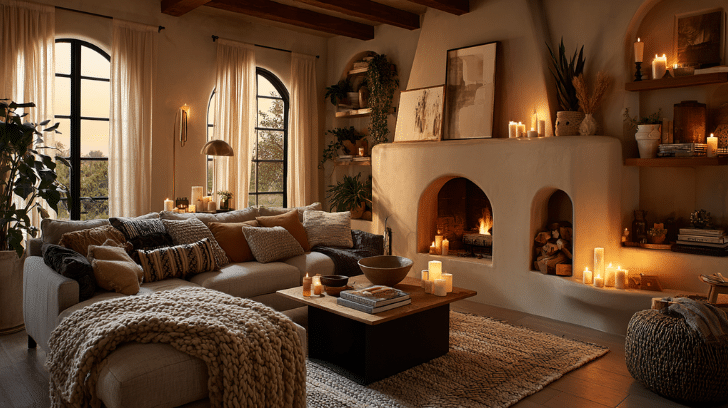
Give it texture so warmth feels visible. Swap a flat surround for stacked stone, fluted tile, or troweled plaster. Limewash softens edges; zellige reflects flicker. If you prefer subtlety, choose beadboard or vertical slats painted in a matte, heat-safe finish.
Vary scale: large-format tile reads calm; small mosaics add movement. Wrap the hearth with honed stone for a tactile ledge. Frame the firebox with a chunky wood mantel or a hammered metal band.
Keep colors cohesive, grout intentional, and profiles clean.
Bring in Greenery With Textured Planters
Even before you rearrange furniture, soften the room’s edges with plants tucked into textured planters. Choose materials that add tactile interest—ribbed ceramic, woven seagrass, fluted stone, or hammered metal.
Mix heights: a floor fiddle-leaf in a chunky basket, trailing pothos on a pedestal, and a compact fern on the coffee table. Keep a cohesive palette so the textures shine.
Mix heights and keep a cohesive palette so your planters’ textures truly shine.
Group planters in threes to create a grounded vignette near the sofa or fireplace. Use stands to lift foliage and reveal patterns.
Prioritize easy-care species if light’s limited. Rotate plants seasonally, wipe leaves, and layer saucers to protect rugs and wood.
Use Plaid, Herringbone, and Subtle Patterns
Because pattern sets the tone, layer classic motifs like plaid, herringbone, and pinstripes to add warmth without visual clutter.
Choose a restrained palette—charcoal, oat, cream, or forest—to keep patterns cohesive. Anchor the room with a herringbone throw or rug, then add plaid pillows in varied scale.
Mix tight pinstripes on a lumbar cushion to break up larger checks. Keep solids nearby so your eye can rest.
Vary textures—wool, linen, tweed—to deepen dimension. Repeat colors across patterns for balance, and limit motifs to two or three.
If the room feels busy, remove one element and reassess spacing and scale.
Mix Metals With Brushed, Aged Finishes
While sleek chrome has its place, a cozier look comes from mixing metals in brushed and aged finishes.
Pair warm brass with oil-rubbed bronze, then layer in antique pewter or blackened steel for depth. Keep sheens matte or satin to diffuse light and soften edges.
Repeat each metal at least twice—on frames, lamps, curtain rods, or hardware—so the palette feels intentional. Use patina and subtle texture to bridge tones, not match them.
Anchor with one dominant metal, then accent with one or two supporting finishes. Avoid mirror-polish surfaces.
Let mellow lusters, soft edges, and timeworn hues create inviting, grounded warmth.
Add a Chunky Knit Pouf or Floor Cushion
One oversized, chunky knit pouf or a low floor cushion instantly softens a living room and invites lounging.
Choose wool, cotton, or a wool-blend for warmth and durability. A round pouf breaks up boxy furniture; a square cushion tucks neatly under a console.
Choose wool, cotton, or blends for cozy durability; round poufs soften, square cushions slide neatly under consoles.
Stick to neutral tones to calm the palette, or pick a saturated hue to spark contrast. Place it near the sofa edge to extend seating or prop up tired feet.
Layer it over a flat-weave rug for grip. If space is tight, select a lightweight, zip-cover style so you can move, rotate, and spot-clean with ease.
Create a Cozy Textured Reading Nook
That plush pouf by the sofa sets the mood—now carve out a dedicated corner for quiet pages and plush textures.
Anchor the nook with a supportive lounge chair, a nubby throw, and a small lumbar pillow for posture.
Layer a soft rug underfoot; choose wool or a dense cotton weave for warmth and grip.
Add a slim side table for tea and a task lamp with a warm bulb.
Mix materials: bouclé, velvet, and linen balance cozy and breathable.
Keep a woven basket for current reads.
Position near natural light, but angle the chair to avoid glare.
Finish with calming art.
Rotate Seasonal Textures Without Clutter
As temperatures shift, swap in tactile layers that suit the season without overflowing your storage.
Curate a small capsule of textiles: two throw blankets, four pillow covers, and one accent rug per season. Store off-season pieces vacuum-sealed, labeled by room and texture.
Curate a seasonal textile capsule: 2 throws, 4 pillow covers, 1 accent rug. Vacuum-seal and label by room and texture.
Choose neutral bases—linen, cotton, or boucle—then rotate accents like chunky knits for winter and gauzy weaves for summer. Keep a slim basket by the sofa for current throws; fold extras on a shelf.
Stick to a cohesive palette so items mix easily. Schedule quarterly swaps, laundering before packing. Donate anything you didn’t use last cycle to prevent buildup.
Make Budget-Friendly Texture Swaps
Start small and target high-impact swaps to add texture without straining your budget.
Swap smooth pillow covers for chunky knits or nubby bouclé. Layer a woven throw over a sleek sofa to balance surfaces. Replace a flat rug with a jute or braided cotton runner near your coffee table.
Update lamp shades to linen or pleated paper for subtle depth. Add cork coasters, a rattan tray, or a seagrass basket for instant tactility. Refresh drawer pulls with leather tabs. Frame art with wood or fabric mats.
Shop secondhand for wool blankets and baskets. One thoughtful change per month keeps costs low.
Conclusion
You don’t need a full makeover to make your living room feel like a hug. Start with a texture palette, layer rugs, and mix linens, knits, and nubby weaves. Add plants, woven trays, and a cushy pouf. Define zones, build layers thoughtfully, and rotate seasonal textures so it never feels cluttered. With a few budget-friendly swaps and a cozy reading nook, you’ll create warmth, depth, and harmony, one tactile layer at a time. Now curl up and enjoy.