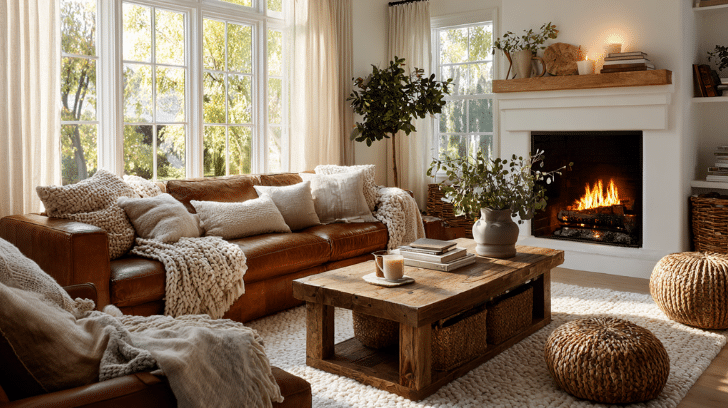
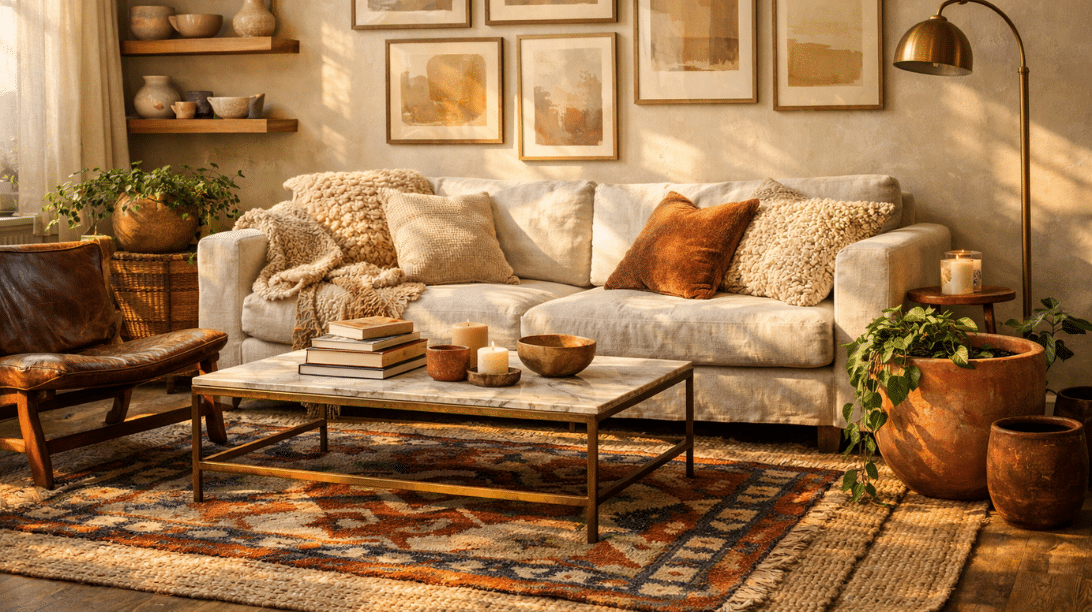
25 Cozy Living Room Decor Ideas Using Rugs
If you want a living room that feels warm and pulled together, start with the rug. You’ll anchor the space, set the palette, and solve layout issues fast. Think generous sizing, smart placement, and textures that invite you to stay awhile. Add a quality pad for comfort, then layer patterns that hide wear from kids and pets. Rotate seasonally for a fresh feel. Ready to refine the look with simple, practical moves that make a big difference?
Start With a Large Living Room Rug to Anchor
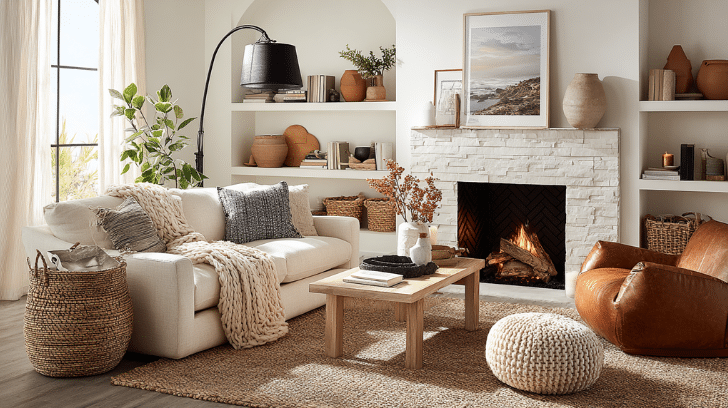
One oversized rug instantly grounds your seating area and pulls the room together. You feel the room warm up as texture, pattern, and color settle the eye and soften hard lines.
Choose a plush weave for comfort underfoot and a hue that complements your palette. Let subtle patterning add depth without stealing focus.
Layer cozy accents—throws, pillows, and a soft ottoman—to echo the rug’s tones and amplify warmth. Balance lighting so the rug’s surface glows, not glares.
Keep edges aligned with your room’s architecture to create calm sightlines. Finally, use durable materials that handle daily traffic and still look inviting.
Size the Rug to Your Seating Footprint
After anchoring the room with a generous rug, match its size to your seating footprint so everything feels connected. Measure the outer edges of your sofa, chairs, and side tables, then choose a rug that extends a few inches beyond that outline on all sides. This creates a unified zone that visually organizes conversation and movement.
Aim for balance: too small looks floaty; too large swallows negative space. Keep consistent margins from walls, and let pathways remain clear.
If your layout shifts, select a slightly larger rug to accommodate future changes. Verify door clearance and vents aren’t blocked, and keep patterns aligned with furniture lines.
Front-Legs-Only Placement for Small Rooms
Two front legs on the rug can make a tight living room feel larger without sacrificing cohesion. You anchor pieces without swallowing precious floor space, so circulation stays open.
Line up the front legs of your sofa and chairs on the rug’s edge, keeping back legs off. Aim for 6–8 inches of overlap for stability and visual unity. Choose a rug that extends beyond the coffee table to create a shared zone.
Keep edges parallel to walls for calm lines. If pieces vary, prioritize the dominant seating. Use low-pile rugs to prevent wobble, and add rug pads so furniture won’t creep.
Float All Furniture on the Rug for Balance
When you place every seating piece fully on the rug, the room instantly feels grounded and harmonious. You create one visual island, clarifying traffic flow and anchoring conversation.
Sofas, chairs, and tables feel connected, so the layout reads intentional, not scattered.
Choose a rug large enough to hold each piece with a few inches to spare. Align edges parallel to walls to reinforce symmetry. Keep consistent spacing around the perimeter to avoid crowding.
Choose a rug that fits every piece, align edges, and keep consistent perimeter spacing.
Let side tables sit entirely on the rug, too, so surfaces feel stable. If your room is open-concept, this approach defines the zone clearly and balances proportions.
Add a Quality Rug Pad for Comfort and Safety
A good rug pad does more than stop slippage—it adds cushioned comfort, protects floors, and extends your rug’s life.
Choose a pad matched to your flooring: felt-and-rubber blends grip hard surfaces, while pure felt works under larger rugs anchored by furniture.
Measure and trim the pad to sit one inch inside the rug’s edge to prevent curling and tripping.
Prioritize non-staining materials labeled safe for hardwood finishes.
In busy rooms, a higher-density pad resists compression and keeps rugs lying flat.
Clean both sides periodically to maintain grip.
With the right pad, you’ll walk safer, feel better, and preserve your investment.
Soften Acoustics With Thick Pile or Padding
With a sturdy pad in place, you can further calm a lively room by choosing thick pile or adding extra padding.
Dense fibers absorb footfall, voices, and TV chatter, reducing echo without sacrificing comfort. Aim for high face weight and tuft density; they dampen sound better than thin, loose weaves.
If allergies worry you, pick low-shed synthetic shag or tightly tufted wool.
Place rugs where noise concentrates—near the sofa, under the coffee table, and along traffic paths. Make sure edges are secured to prevent curl.
Vacuum regularly to keep fibers springy, and rotate seasonally so compression and wear stay even.
Layer Small Rugs Over a Neutral Base
Two or three small rugs on a quiet, neutral foundation add depth without visual clutter. You’ll create defined zones for seating, reading, or play without overwhelming the room.
Choose a base rug in soft gray, beige, or ivory, then layer smaller pieces to guide the eye and frame furniture legs. Stagger edges slightly so the layers feel intentional. Keep patterns cohesive—repeat a color from your cushions or artwork. Use varied scales: one subtle pattern, one bolder motif.
Anchor coffee tables or side chairs so rugs don’t drift. Leave breathing space around the perimeter, and guarantee door swings and traffic paths remain smooth.
Mix Rug Textures (Wool, Cotton, Leather, Jute)
Layering doesn’t just mean size and pattern—you’ll get more warmth by mixing textures. Pair a dense wool rug with a breezy cotton flatweave to balance cushion and breathability.
Add a stitched leather hide for sleek contrast and easy cleaning in high-traffic zones. Anchor everything with a jute foundation; its earthy fiber grounds color and adds gentle grit underfoot.
Think contrast: soft next to structured, matte beside slight sheen. Keep a cohesive palette so textures, not hues, do the talking.
Use rug pads to prevent shifting and to preserve delicate fibers. Rotate layers seasonally, and spot-clean materials according to their specific care needs.
Choose Plush Shag Rugs for Instant Coziness
Even before you add throws or candles, a plush shag rug softens the room and invites you to sink in.
Choose a dense, high-pile shag that cushions every step and quiets echo. Look for fibers like wool, microfiber, or polyester that feel velvety and resist matting. Anchor it beneath your sofa to define the seating zone and frame your coffee table.
Pick soothing neutrals—cream, taupe, charcoal—for an enveloping backdrop, or try a muted blush for subtle warmth. Keep the pile fresh by rotating the rug and spot-cleaning promptly. Use a quality rug pad for grip, loft, and extra underfoot comfort.
Warm Up With Earthy Jute or Sisal Rugs
While plush shags feel luxurious, jute and sisal bring grounded warmth and texture that instantly cozies up a living room.
You’ll love how their earthy fibers soften hard floors and add subtle dimension without overwhelming your palette. Choose a chunky jute for a relaxed, beachy vibe, or a tighter sisal weave for crisp, tailored structure.
Layer them under a sofa and coffee table to anchor the seating zone. Keep tones sandy, caramel, or wheat to complement wood and leather.
Add a rug pad for comfort and grip. Spot-clean promptly, rotate seasonally, and vacuum regularly to keep fibers fresh and tidy.
Use a Vintage Living Room Rug for Soul and Story
If natural fibers set a calm foundation, a vintage rug brings the soul. You anchor your room with history underfoot—sun-faded dyes, hand-knotted texture, and irregular edges that feel human.
You don’t chase perfection; you invite patina, repair, and stories.
Choose a palette that echoes your wood tones and upholstery, then let the rug guide accent colors. Layer it over a neutral base for warmth and depth.
Mind scale: legs of key pieces should touch the rug to unify seating. Rotate it seasonally, use a thin pad to protect fibers, and vacuum gently.
When guests ask, you’ll share where and why it’s yours.
Bring In Patterned Rugs to Hide Wear
Because life happens—pets, kids, coffee—patterned rugs become your quiet problem-solver, masking scuffs and spills without feeling fussy.
Choose designs with varied tones and small-to-medium motifs; they scatter the eye and conceal traffic paths. Multicolor palettes forgive stains and let you pull accent hues into pillows and throws.
Go for low to medium pile for durability and easy vacuuming. Opt for wool or performance blends; they bounce back and clean well.
Layer a rug pad to reduce slippage and cushion steps. Size it generously so seating legs rest on it, distributing wear.
Rotate seasonally to even fade and footfall.
Try Checkerboard or Stripes for Modern Charm
Pattern does more than hide wear—it sets the tone, and checkerboard or striped rugs instantly sharpen a living room’s look.
Choose high-contrast black-and-white for crisp energy, or soften it with oatmeal and charcoal. Keep furniture simple: clean-lined sofas and streamlined coffee tables let the rug lead.
Align stripes with the room’s longest wall to stretch the space visually. Layer solids and textured throws so patterns don’t compete.
If you love color, try muted terracotta stripes or moss-and-cream checks for warmth. Use a low-pile flatweave for easy maintenance.
Anchor with rug pads, and size generously so front legs sit on the rug.
Use a Round Rug to Soften Sharp Layouts
Something as simple as a round rug can soften a boxy room and ease harsh angles.
Place one under a coffee table to curve the eye and relax rigid lines. Pick a size that lets front sofa legs and nearby chairs touch the edge, creating cohesion without crowding. Choose plush wool for warmth or flatweave for easy care.
If your furniture feels heavy, a light, tonal rug lifts the look; if it feels sparse, a deeper hue grounds it.
Echo circular shapes with a round side table, dome lamp, or curved vase. Keep patterns subtle so the silhouette stays the focus.
Use Rugs to Zone Open-Plan Living Rooms
Even in a wide-open layout, rugs act like quiet dividers that shape how you live in the space. Use them to carve out a lounge zone, a reading nook, or a dining spot without building walls.
Choose sizes that match each area’s footprint, leaving clear walkways between. Keep palettes related but distinct to signal purpose while maintaining flow. Align rug edges with architectural lines to reduce visual clutter.
Layer textures to define mood—plush for relaxing, flatweave for high-traffic. Repeat a color or weave across zones to unify.
If your layout shifts seasonally, swap rugs or rotate placements to adapt.
Add a Living Room Rug Under the Coffee Table
While the sofa sets the scene, a rug under your coffee table anchors the whole seating area and pulls pieces into a cohesive vignette.
Choose a size that lets front legs of surrounding chairs or the sofa touch the rug, so everything feels connected. Center the coffee table with equal rug margin on all sides.
Mind proportion: a rug too small makes the table look stranded; too large swallows negative space.
Pick a low-pile or flatweave for easy sliding and crumb cleanup. Pattern can disguise spills; a solid grounds bold upholstery.
Use a rug pad to prevent shifting and protect floors.
Extend the Rug Toward the Fireplace for Warmth
Two simple moves make your hearth feel inviting: extend the rug’s leading edge toward the fireplace and align it square to the firebox.
This simple shift visually anchors the room, pulls your seating zone forward, and frames the focal point. Leave a safe gap—at least 18 inches—from the firebox to prevent heat damage.
Choose a dense, low-pile wool or performance blend that resists ember pops and cleans easily. Keep front sofa legs on the rug to maintain cohesion.
Opt for dense, low-pile wool; it shrugs off embers and cleans up easily. Anchor front sofa legs on it.
If your hearth projects, center the rug on that line. Balance the composition with matching side clearances so the layout feels intentional.
Add a Runner Behind the Sofa or in Pass-Throughs
One slim runner can solve traffic flow and style in one move: tuck it behind the sofa or lay it through a pass-through to define a path without bulk.
You’ll guide footsteps, protect floors, and add texture where furniture doesn’t reach. Pick a low-pile, durable weave so doors clear and edges don’t curl.
Keep the runner’s length a few inches short of the walkway; leave breathing room along walls. Anchor it with a rug pad to prevent slips.
Align the pattern with the room’s sightline for cohesion. If the sofa floats, parallel placement visually corrals the seating zone without crowding it.
Use Warm Rug Colors to Cozy Up Cool Palettes
Even if your living room leans cool with grays, blues, or crisp whites, a warm-toned rug instantly softens the vibe.
Reach for earthy terracotta, honey, rust, camel, or muted marigold to add heat without overwhelming the palette. Choose a low-contrast pattern or heathered weave so the color blends, not shouts.
Opt for terracotta, honey, or rust in low-contrast weaves so warmth whispers, not shouts.
Layer textures—wool, jute blends, or tufted piles—to deepen the cozy feel.
Echo the rug’s warmth with a few accents: a leather tray, a brass lamp, or clay planters. Keep wood tones warm and finishes matte.
Let the rug anchor the room’s temperature, so the cool hues feel balanced and inviting.
Ground Bold Sofas With a Calm Neutral Rug
If you’ve warmed up cool palettes with earthy rugs, flip the script when your sofa steals the spotlight.
Anchor saturated upholstery with a calm, neutral rug that settles the room and lets color read confidently. Choose low-contrast tones—ivory, greige, oatmeal, or stone—to smooth visual noise without draining energy.
Favor texture over pattern: a nubby wool, flatweave, or subtle heather adds depth while staying quiet.
Size matters: extend the rug under front legs or fully beneath the seating to unite pieces. Keep edges clean, pile comfortable, and finishes matte.
Add one or two understated accents so your bold sofa remains the clear focal point.
Brighten Neutrals With a Color-Pop Patterned Rug
When a neutral living room needs lift, roll out a color-pop patterned rug to spark energy without overwhelming calm foundations.
Choose a design with crisp contrast—think coral geometrics, teal medallions, or saffron stripes—so your beige, cream, and wood tones feel lively, not busy.
Keep larger furniture simple to let the rug lead. Scale matters: a bigger rug unifies seating and makes the color feel intentional.
Favor low-to-medium pile for clean lines and easy care. Balance pattern density; tight motifs read refined, oversized shapes feel playful.
Anchor with a rug pad to prevent slippage and preserve the rug’s sharp silhouette.
Repeat Rug Colors in Pillows and Throws
Because color works best in conversation, pull two or three hues from your rug and echo them in pillows and throws to knit the room together.
Choose the dominant shade for larger pillows, then sprinkle accent colors in smaller cushions or a lightweight throw. Vary textures—linen, velvet, chunky knit—so the repetition feels layered, not matchy.
Lead with the rug’s dominant hue, then layer accents and mixed textures for depth
Keep patterns balanced: if the rug’s bold, let pillows be simpler; if the rug’s quiet, introduce a subtle stripe or block print. Even a single contrasting piped edge can nod to the rug.
Repeat colors at least three times to create rhythm and effortless cohesion.
Choose Washable, Kid- and Pet-Friendly Rugs
Spills happen, so choose rugs that can handle real life: machine-washable, low-pile, and tightly woven. You’ll clean messes fast, and fibers won’t trap crumbs or fur.
Prioritize performance materials like polypropylene, recycled PET, or washable wool blends; they resist stains and dry quickly. Pick darker, patterned designs to camouflage daily traffic.
Use non-slip rug pads to prevent slides during playtime and protect floors. Look for bound edges and serged seams that won’t fray. If you’ve got chewers or scratchers, avoid fringe.
Choose sizes that anchor seating while leaving clearance around vents and doors. Keep a backup rug for emergencies.
Rotate and Flip Rugs Seasonally for Freshness
You’ve picked durable, low-maintenance rugs; now keep them looking new by rotating and flipping them with the seasons.
Shift high-traffic edges toward quieter zones to even out wear and fading. If the weave allows, flip the rug to refresh pile resilience and color.
Use seasonal cues: rotate in spring and fall when sunlight angles change, and flip when heating or cooling patterns shift. Align rotations with deep cleans and pad checks.
Mark the rug’s underside with discreet arrows so you don’t lose track. This simple routine extends lifespan, preserves patterns, and keeps your living room feeling intentional and inviting year-round.
Layer Faux Sheepskins on Seats and Ottomans
Even a simple chair feels luxe when you drape a faux sheepskin over it, and ottomans gain instant texture and warmth. Choose dense, soft piles that won’t shed easily, and cut or fold edges to fit neatly.
Aim for contrast: ivory on dark leather, charcoal on pale linen. Anchor slippery pieces with rug grippers or hidden upholstery pins. Layer over bench seats to soften angles and invite lingering.
Keep traffic paths clear, and rotate to distribute wear. Spot-clean with mild soap; air-dry flat. In summer, swap for lightweight boucle throws, then bring the sheepskins back when evenings cool.
Conclusion
Wrap up your living room with intention: start big to anchor, size to your seating, and try front-legs-only in tight spaces. Float furniture when you can for balance, and don’t skip a cushy rug pad. Echo rug colors in pillows and throws, and choose washable, pet-friendly weaves. Rotate and flip rugs to keep things fresh. Layer textures—think jute, shag, or faux sheepskins—for warmth, softness, and style. Do this, and you’ll create a cozy, welcoming retreat.